Dimethylamine, hydrochloride → 2-Dimethylamino-8-bromo-1,2,3,4-tetrahydronaphthalene
Reaction equation

[Br:1][C:2]1[CH:3]=[CH:4][CH:5]=[C:6]2[C:11]=1[CH2:10][C:9](=O)[CH2:8][CH2:7]2.C([O-])(=O)C.[Na+].C([BH3-])#N.[Na+].Cl.[CH3:23][NH:24][CH3:25]>C(#N)C>[CH3:23][N:24]([CH3:25])[CH:9]1[CH2:8][CH2:7][C:6]2[C:11](=[C:2]([Br:1])[CH:3]=[CH:4][CH:5]=2)[CH2:10]1Participants
Reactant 4
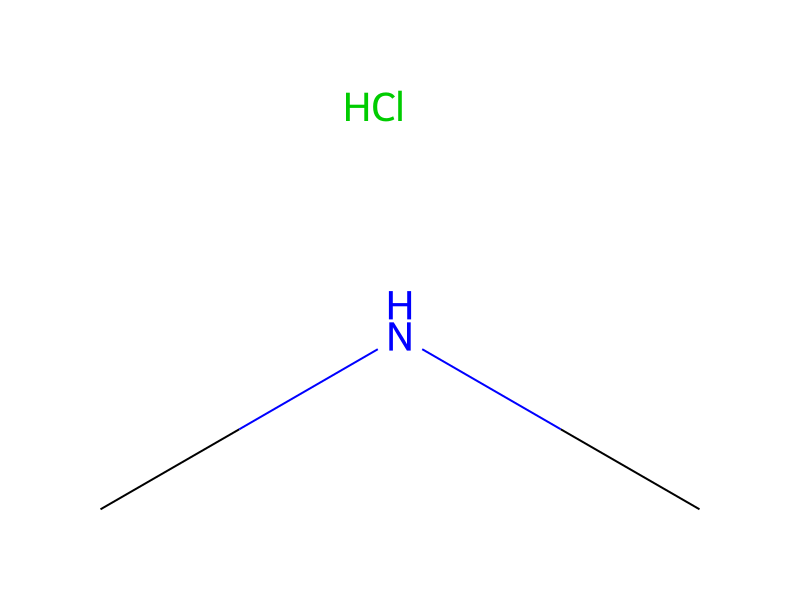



Product 1

Reagents, catalysts & solvents 1

Procedure
To a solution of 8-bromo-2-tetralone (4.5 gm, mMol) in acetonitrile (100 mL) were added sodium acetate (9.9 gm, 120 mMol), sodium cyanoborohydride (880 mg, 120 mMol), dimethylamine hydrochloride (9.8 gm, 120 mMol) and 4A sieves (2.0 gm). The mixture was stirred at room temperature for 3 days. The reaction mixture was then filtered through a bed of celite, and the filtrate was poured into a slurry of ice and water. The solution was made acidic (HC1) and extracted well with diethyl ether. The remaining aqueous was made basic (NH4OH) and extracted well with dichloromethane. These organic phases were combined, dried (Na2SO4), and concentrated in vacuo to give a dark oil. Purification by flash chromatography (5% methanol in dichloromethane+tr. NH4OH) gave the title compound as a yellow oil (1.5 gm, 30%).
Workup
- filtrationThe reaction mixture was then filtered through a bed of celite
- additionthe filtrate was poured into a slurry of ice and water
- extractionextracted well with diethyl ether
- extractionextracted well with dichloromethane
- dry with materialdried (Na2SO4)
- concentrationconcentrated in vacuo
- customto give a dark oil
- customPurification by flash chromatography (5% methanol in dichloromethane+tr. NH4OH)
Sources & evidence
- ORD record
- ord-00a237ca1ae040cd9de90295258258aa
- Source dataset
- uspto-grants-1994_08
- Patent number
- US05340838
Reaction notes
Loading…