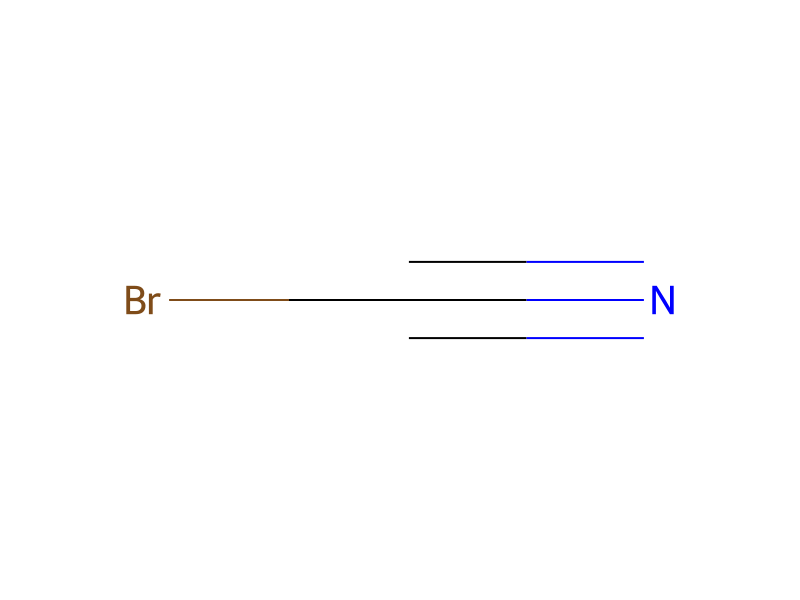
Cyanogen Bromide → HCID 178511844, compound
Reaction equation

[N:1]#CBr.[F:4][C:5]1[CH:13]=[C:12]2[C:8]([C:9]([CH:14]3[CH2:20][CH:19]4[N:21]([CH3:22])[CH:16]([CH2:17][CH2:18]4)[CH2:15]3)=[N:10][NH:11]2)=[CH:7][CH:6]=1.C(=O)([O-])[O-].[K+].[K+]>C1COCC1.O>[C:22]([N:21]1[CH:19]2[CH2:18][CH2:17][CH:16]1[CH2:15][CH:14]([C:9]1[C:8]3[C:12](=[CH:13][C:5]([F:4])=[CH:6][CH:7]=3)[NH:11][N:10]=1)[CH2:20]2)#[N:1]Participants
6
Reactant 3


Product 1

Reagents, catalysts & solvents 2


Procedure
Cyanogen bromide (2.75 g) was added in one portion to a suspension of 3-(6-fluoro-1H-indazol-3-yl)-8-methyl-8-azabicyclo[3.2.1]octane (4.90 g) and potassium carbonate (2.75 g) in 70 ml of THF at room temperature. The mixture was stirred for 2 hours, then diluted with water and the product was extracted into ethyl acetate. The organic solution was washed with brine, dried over MgSO4, filtered and concentrated to leave 3.4 g of crude solids. The solids were purified by flash chromatography over silica gel and recrystallized from ethanol to yield 1.15 g of the desired product, m.p. 182°-184° C.
Workup
- extractionthe product was extracted into ethyl acetate
- washThe organic solution was washed with brine
- dry with materialdried over MgSO4
- filtrationfiltered
- concentrationconcentrated
- customto leave 3.4 g of crude solids
- customThe solids were purified by flash chromatography over silica gel
- customrecrystallized from ethanol
Sources & evidence
- ORD record
- ord-39146583e1e74afd982b417630e42817
- Source dataset
- uspto-grants-1994_08
- Patent number
- US05340936
Reaction notes
Loading…