Ethyl Acetate → 4-(2-(2-Bromophenylamino)-3,4-dioxocyclobut-1-enylamino)-3-hydroxybenzonitrile
Reaction equation

C(O[C:4]1[C:5](=[O:19])[C:6](=[O:18])[C:7]=1[NH:8][C:9]1[CH:14]=[CH:13][C:12]([C:15]#[N:16])=[CH:11][C:10]=1[OH:17])C.[Br:20][C:21]1[CH:27]=[CH:26][CH:25]=[CH:24][C:22]=1[NH2:23].C(OC(=O)C)C>CS(C)=O>[Br:20][C:21]1[CH:27]=[CH:26][CH:25]=[CH:24][C:22]=1[NH:23][C:4]1[C:5](=[O:19])[C:6](=[O:18])[C:7]=1[NH:8][C:9]1[CH:14]=[CH:13][C:12]([C:15]#[N:16])=[CH:11][C:10]=1[OH:17]Participants
5
Reactant 3

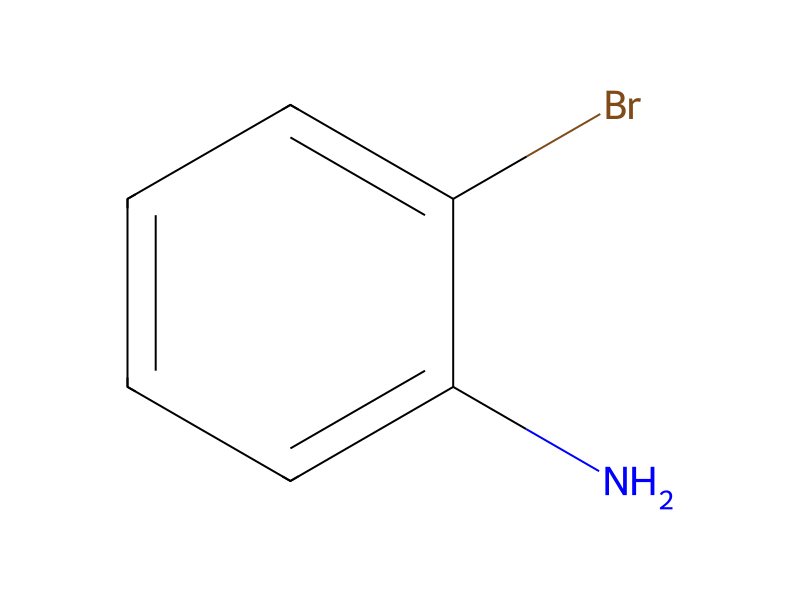

Product 1

Reagents, catalysts & solvents 1

Procedure
A mixture of 3-ethoxy-4-(2-hydroxy-4-cyanoanilino)-3-cyclobutene-1,2-dione (0.7 g, 2.71 mmol) and 2-bromoaniline (0.47 g, 2.73 mmol) were heated in 6 ml DMSO for overnight. The reaction mixture was cooled to room temperature, and ethylacetate was added and precipitates formed. The filtrate was partitioned between ethylacetate and water. The organic layer was dried over sodium sulfate and concentrated. After Gilson HPLC, 34 mg (3%) of purified product was obtained. LC/MS (H+) 386
Workup
- customprecipitates
- customformed
- customThe filtrate was partitioned between ethylacetate and water
- dry with materialThe organic layer was dried over sodium sulfate
- concentrationconcentrated
Sources & evidence
- ORD record
- ord-caed5f0d9034426683d26896d44dcb8f
- Source dataset
- uspto-grants-2006_03
- Patent number
- US07008962B2
Reaction notes
Loading…