Hydrochloric Acid → 1-(Bicyclo[2.2.1]hept-5-en-2-yl)-2,2,4,4,4-pentafluorobutane-1,3,3-triol
Reaction equation

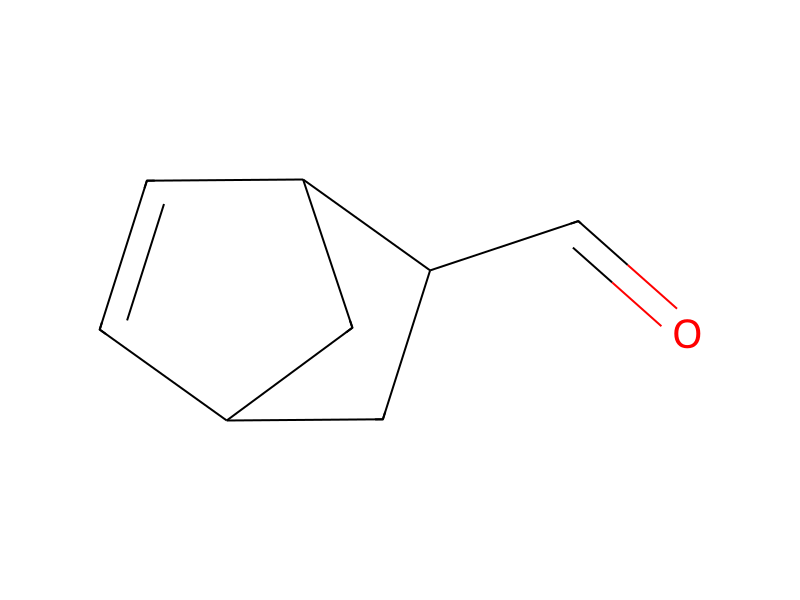
C([Li])CCC.[F:6][C:7]([F:15])([F:14])[CH:8]([OH:13])[C:9]([F:12])(F)[F:10].[CH:16]12[CH2:22][CH:19]([CH:20]=[CH:21]1)[CH2:18][CH:17]2[CH:23]=[O:24].Cl.[O:26]1CCCC1>>[CH:16]12[CH2:22][CH:19]([CH:20]=[CH:21]1)[CH2:18][CH:17]2[CH:23]([OH:24])[C:9]([F:12])([F:10])[C:8]([OH:26])([OH:13])[C:7]([F:15])([F:14])[F:6]Participants
6





Conditions
- Temperature
- 0 °C
Procedure
1290 mL of butyllithium (1.6 M hexane solution) was added to a mixture of 168 g of 1,1,1,3,3,3-hexafluoro-2-propanol and 1200 g of tetrahydrofuran at −70° C. under a nitrogen atmosphere. The temperature was increased to 0° C. gradually, and stirred at the temperature for 30 minutes. Then, 134 g of 5-norbornene-2-carbaldehyde was added thereto at 0° C. After stirring for 1 hour, dilute hydrochloric acid was added to terminate the reaction and to neutralize it. After the standard aqueous work-up, the product was purified by silica gel column chromatography to yield 230 g of 1-(5-norbornene-2-yl)-2,2,4,4,4-pentafluorobutane-1,3,3-triol (yield from 1,1,1,3,3,3-hexafluoro-2-propanol was 80%)
Workup
- customat 0° C
- stirringAfter stirring for 1 hour
- customto terminate
- customthe reaction
- customAfter the standard aqueous work-up, the product was purified by silica gel column chromatography
Sources & evidence
- ORD record
- ord-adf7c6181fd449c2b0e524b493c527b7
- Source dataset
- uspto-grants-2006_03
- Patent number
- US07012161B2
Reaction notes
Loading…