Sodium hydride → N-(3-Methyl-5-isoxazolyl)-4-(trifluoromethyl)nicotinamide
Reaction equation

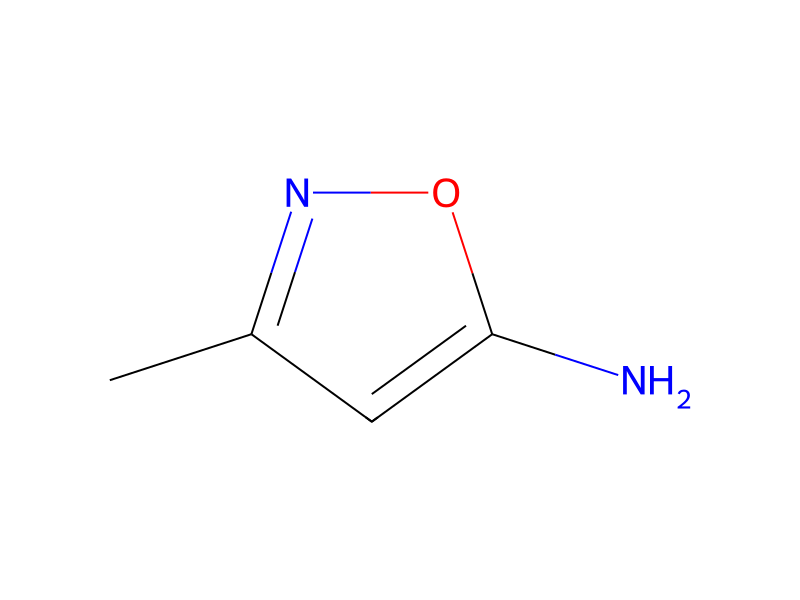
[NH2:1][C:2]1[O:6][N:5]=[C:4]([CH3:7])[CH:3]=1.[H-].[Na+].[F:10][C:11]([F:22])([F:21])[C:12]1[C:17]([C:18](Cl)=[O:19])=[CH:16][N:15]=[CH:14][CH:13]=1.C(OCC)(=O)C.CCCCCC>CN(C)C=O>[CH3:7][C:4]1[CH:3]=[C:2]([NH:1][C:18](=[O:19])[C:17]2[C:12]([C:11]([F:22])([F:10])[F:21])=[CH:13][CH:14]=[N:15][CH:16]=2)[O:6][N:5]=1Participants
6
Reactant 4



Product 1

Reagents, catalysts & solvents 1

Conditions
- Temperature
- 80 °C
Procedure
5-Amino-3-methylisoxazole (147 mg, 1.5 mmol) was dissolved in dimethylformamide (5 ml), sodium hydride (60% dispersion in mineral oil, 72 mg, 1.8 mmol) was added and subsequently, 4-trifluoromethylnicotinic acid chloride (314 mg, 1.5 mmol) was added under ice-cooling. The mixture was stirred under heating at 80° C. for 2 hours. The reaction mixture was poured into ice-water and extracted with ethyl acetate. The organic layer was washed with brine and then dried over anhydrous magnesium sulfate. The solvent was removed by distillation under reduced pressure, and the resulting residue was purified by thin layer chromatography (a developing solvent: ethyl acetate/hexane=1/1) to obtain the title compound (181 mg, yield 44%).
Workup
- temperaturecooling
- extractionextracted with ethyl acetate
- washThe organic layer was washed with brine
- dry with materialdried over anhydrous magnesium sulfate
- customThe solvent was removed by distillation under reduced pressure
- customthe resulting residue was purified by thin layer chromatography (a developing solvent
Sources & evidence
- ORD record
- ord-8b56b414d1c944f58a9ca45012b7cc37
- Source dataset
- uspto-grants-2006_03
- Patent number
- US07015236B2
Reaction notes
Loading…