Acetamide → HCID 89644412, compound
Reaction equation

[Br:1][C:2]1[CH:3]=[C:4]2[C:9](=[CH:10][C:11]=1[O:12][C:13]([F:16])([F:15])[F:14])[CH:8](Cl)[NH:7][CH:6]=[CH:5]2.C([NH2:21])(=O)C.C([O-])([O-])=O.[K+].[K+]>C(OC(=O)C)C.O>[Br:1][C:2]1[CH:3]=[C:4]2[C:9](=[CH:10][C:11]=1[O:12][C:13]([F:16])([F:15])[F:14])[C:8]([NH2:21])=[N:7][CH:6]=[CH:5]2Participants
6
Reactant 3
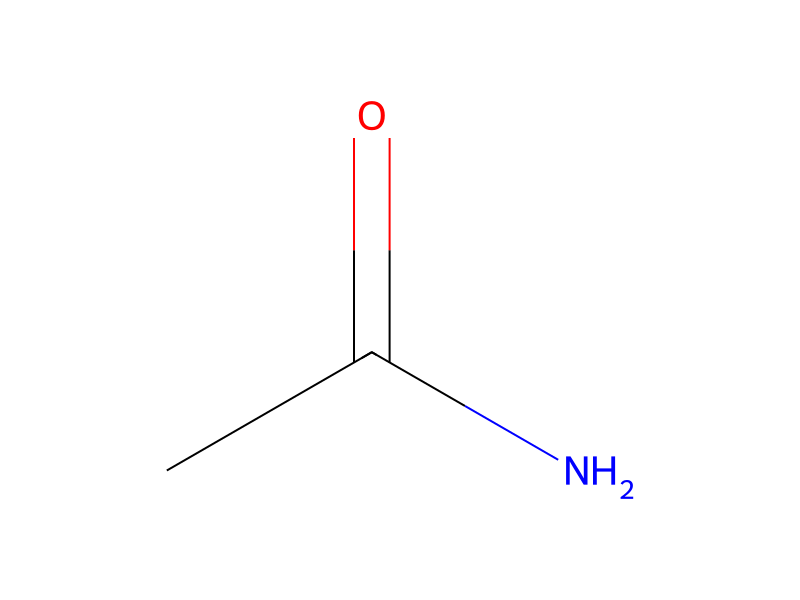


Product 1

Reagents, catalysts & solvents 2


Conditions
- Temperature
- 180 °C
Procedure
4 g (12 mmol) of 6-Bromo-1-chloro-7-trifluoromethoxy-2H-isoquinoline are intermixed with 14 g acetamide (14 eq.) and 5 g (3 eq.) K2CO3. This mixture is heated for 1 h at 180° C. under stirring. The reaction mixture is stirred in ethylacetate (100 ml) and water (100 ml). The organic phase is separated, dried with Na2SO4 and the solvent removed under reduced pressure after filtration of the drying agent. For purification, a chromatography on silical gel (40-63μ, Merck) is performed with ethylacetate as mobile phase. 890 mg of a solid are obtained.
Workup
- customThe organic phase is separated
- dry with materialdried with Na2SO4
- customthe solvent removed under reduced pressure
- filtrationafter filtration of the drying agent
- customFor purification
Sources & evidence
- ORD record
- ord-76f2430b7d15484bbb2db50e1e718941
- Source dataset
- uspto-grants-2015_10
- Patent number
- US09150544B2
Reaction notes
Loading…