Methyl Methacrylate → Butyl prop-2-enoate--methyl 2-methylprop-2-enoate (1/1)
Reaction equation

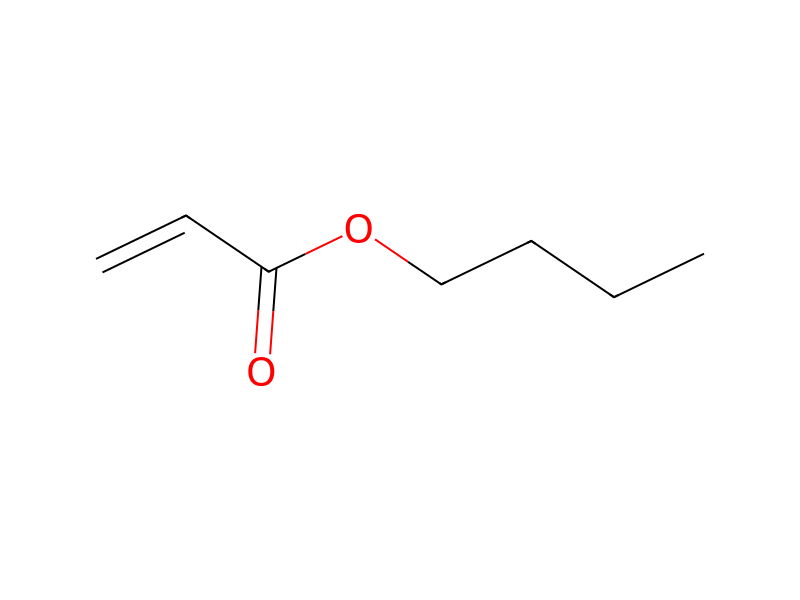
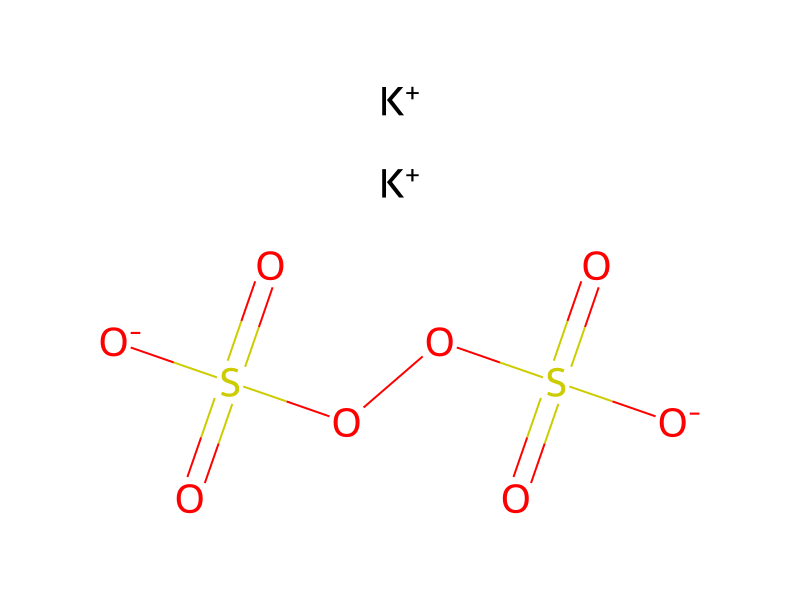
[C:1]([O:6][CH3:7])(=[O:5])[C:2]([CH3:4])=[CH2:3].[C:8]([O:12][CH2:13][CH2:14][CH2:15][CH3:16])(=[O:11])[CH:9]=[CH2:10].S(OOS([O-])(=O)=O)([O-])(=O)=O.[K+].[K+]>O>[C:1]([O:6][CH3:7])(=[O:5])[C:2]([CH3:4])=[CH2:3].[C:8]([O:12][CH2:13][CH2:14][CH2:15][CH3:16])(=[O:11])[CH:9]=[CH2:10]Participants
Reactant 3

Product 1

Reagents, catalysts & solvents 1

Procedure
Into a glass polymerization vessel equipped with a reflux condenser, a dripping funnel, a thermometer and a nitrogen inlet port were charged 500 parts of ion exchanged water and 28 parts of polyvinyl alcohol having a mercapto group at an end (M-205: degree of polymerization: 550; degree of saponification: 88.2 mol %, manufactured by Kuraray Co., Ltd.), dissolution was permitted at 95° C. Next, 20 g of methyl methacrylate and 20 g of n-butyl acrylate were added thereto, followed by replacement with nitrogen gas. Then the temperature was elevated to 65° C., and 12 g of a 1% aqueous potassium persulfate solution was added thereto to start the polymerization. Furthermore, 180 g of methyl methacrylate and 180 g of n-butyl acrylate were continuously added over 2 hours. The polymerization was completed in 4 hours to obtain a methyl methacrylate/n-butyl acrylate copolymer (ACR) emulsion having a solid content concentration of 45.1% and a viscosity of 2,800 mPa·s. A clay (Huber-900: kaolinite clay; mean particle diameter: 0.6 μm, manufactured by Huber Co.) in an amount of 8 parts was added to 100 parts of the aqueous solution of PVA 1 obtained in Example 49, and the mixture was stirred to allow the clay to be sufficiently dispersed. Thereto were added 35.4 parts of the ACR emulsion, and mixed to prepare an adhesive (mass ratio of the solid contents of PVA 1, ACR and the clay being 100:400:200). Using the resulting adhesive, evaluations were made on the initial adhesiveness, storage stability and water resistant adhesiveness in accordance with the method described above. The results are shown in Table 5.
Workup
- customInto a glass polymerization vessel
- customequipped with a reflux condenser, a dripping funnel
- additiona thermometer and a nitrogen inlet port were charged 500 parts of ion
- customat an end (M-205: degree of polymerization: 550; degree of saponification: 88.2 mol %, manufactured by Kuraray Co., Ltd.), dissolution
- customwas permitted at 95° C
- customwas elevated to 65° C.
- customthe polymerization
Sources & evidence
- ORD record
- ord-1f4c9921fce54d1fb67e254f1aa049e1
- Source dataset
- uspto-grants-2015_10
- Patent number
- US09156928B2
Reaction notes
Loading…