2,6-Lutidine → HCID 87107731, compound
Reaction equation

[P:1]([Cl:5])(Cl)([Cl:3])=[O:2].N1C(C)=CC=CC=1C.[N:14]1([CH:19]2[CH2:24][CH2:23][NH:22][CH2:21][CH2:20]2)[CH2:18][CH2:17][CH2:16][CH2:15]1>C(Cl)Cl>[ClH:3].[N:14]1([CH:19]2[CH2:24][CH2:23][N:22]([P:1]([Cl:5])([Cl:3])=[O:2])[CH2:21][CH2:20]2)[CH2:18][CH2:17][CH2:16][CH2:15]1Participants
5
Reactant 3


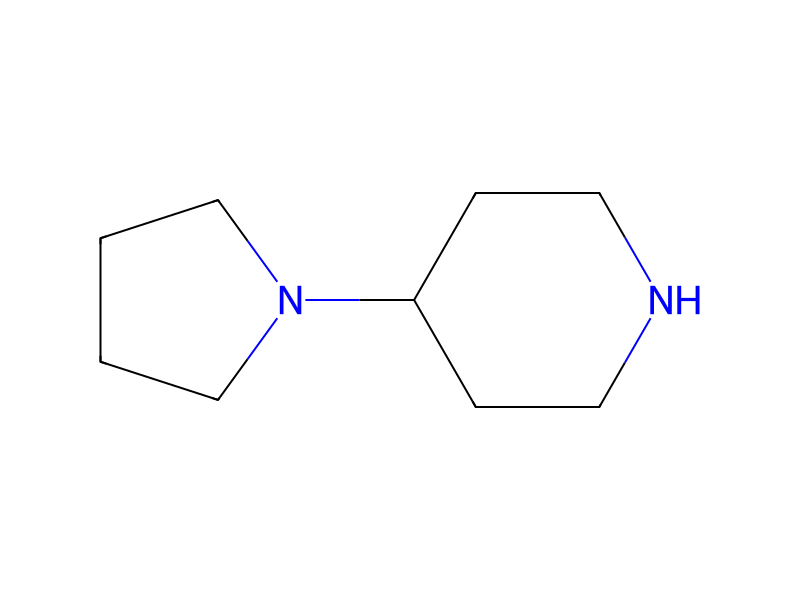
Product 1

Reagents, catalysts & solvents 1

Procedure
To a cooled (ice/water bath) solution of phosphorus oxychloride (5.70 mL, 55.6 mmol) in DCM (30 mL) was added 2,6-lutidine (19.4 mL, 167 mmol) and a DCM solution (30 mL) of 4-(1-pyrrolidinyl)-piperidine (8.58 g, 55.6 mmol) and stirred for 1 hour. The suspension was filtered and solid washed with excess diethyl ether to afford the title pyrrolidine (17.7 g, 91% yield) as a white solid. ESI/MS calcd. for 1-(4-nitrophenyl)piperazine derivative C19H30N5O4P 423.2. found m/z=422.2 (M−1).
Workup
- filtrationThe suspension was filtered
- washsolid washed with excess diethyl ether
Sources & evidence
- ORD record
- ord-7a1b9fc30d8e49349f9407d98fb3135c
- Source dataset
- uspto-grants-2015_10
- Patent number
- US09161948B2
Reaction notes
Loading…