Magnesium bicarbonate → Calcium Carbonate
Reaction equation
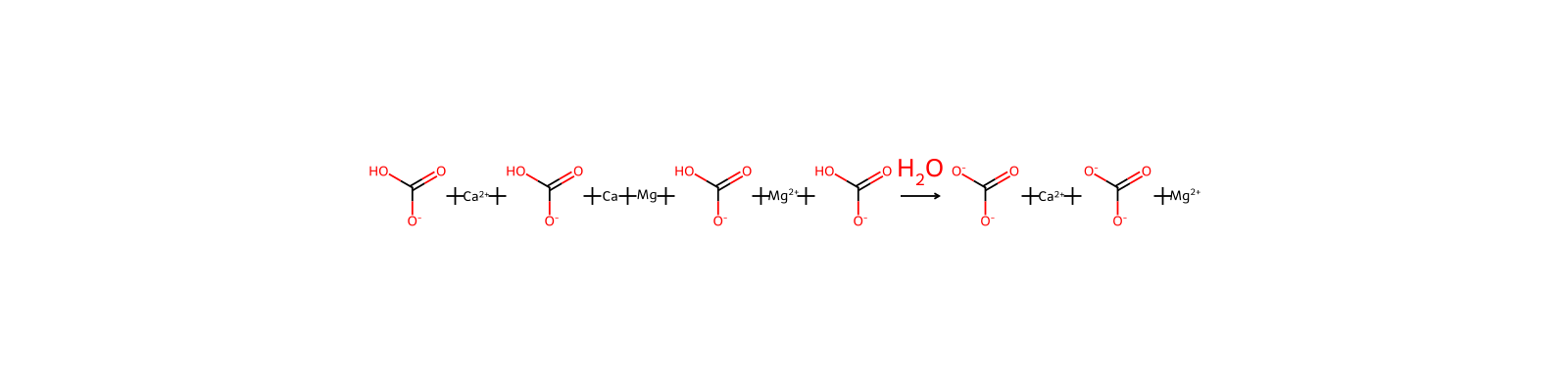
[C:1](=[O:4])([OH:3])[O-:2].[Ca+2:5].[C:6](=[O:9])([OH:8])[O-:7].[Ca].[Mg:11].C(=O)(O)[O-].[Mg+2].C(=O)(O)[O-]>O>[C:1](=[O:2])([O-:4])[O-:3].[Ca+2:5].[C:6](=[O:7])([O-:9])[O-:8].[Mg+2:11]Participants
Reactant 4



Product 2
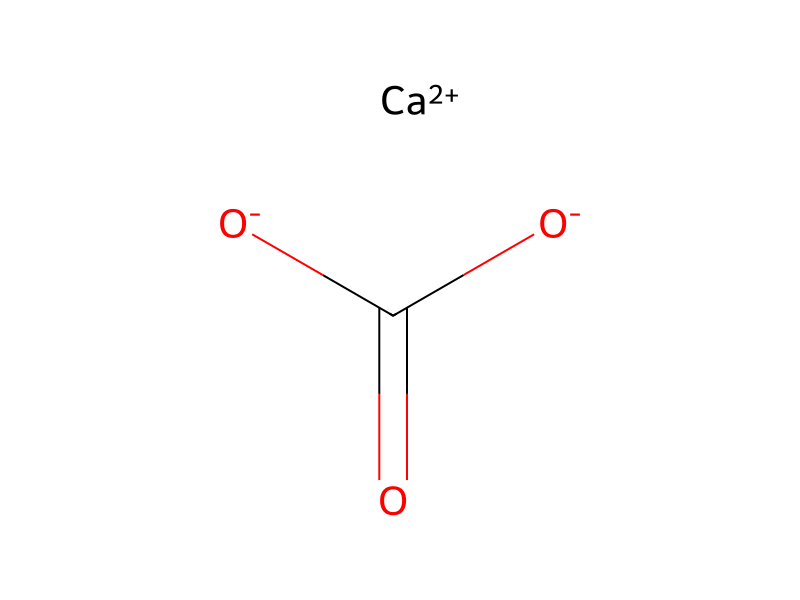
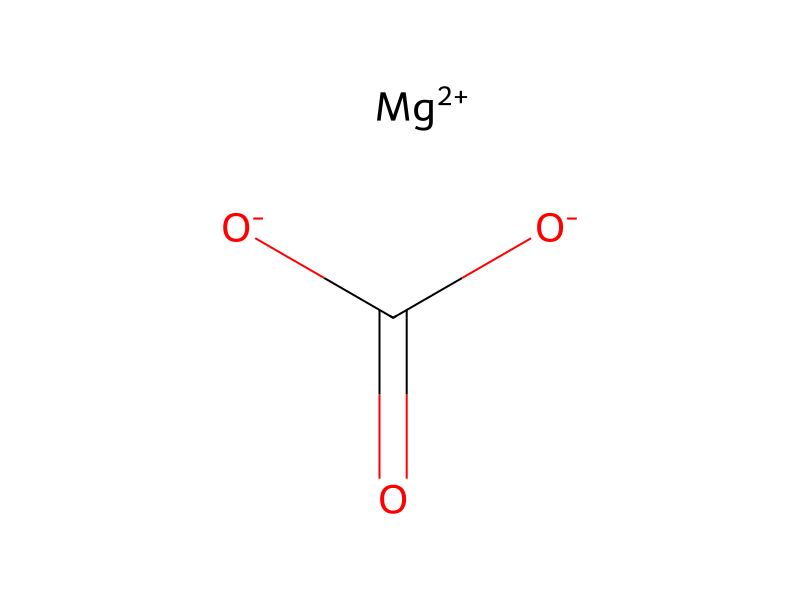
Reagents, catalysts & solvents 1
Procedure
Mixing lime with the water will result in the lime preferentially reacting with carbon dioxide and bicarbonates to cause calcium carbonate to precipitate as calcium carbonate particles. This ordinarily occurs at a pH of approximately 10 to approximately 10.3. Once the carbon dioxide demand has been met, the lime is free to react with calcium bicarbonate, for example, which further results in the precipitation of calcium carbonate particles. Calcium bicarbonate is typically the most common calcium compound found in untreated water but other calcium-based hardness compounds have similar reactions. Magnesium compounds have a slightly different reaction. Generally, magnesium bicarbonate reacts with lime and produces calcium carbonate and magnesium carbonate. Then the magnesium carbonate reacts with lime and creates more calcium carbonate and magnesium hydroxide. Both of these compounds precipitate out of water.
Workup
- customa slightly different reaction
Sources & evidence
- ORD record
- ord-434a16b5a502449192df3f89547244f6
- Source dataset
- uspto-grants-2015_10
- Patent number
- US09169144B2
Reaction notes
Loading…