Potassium Carbonate → HCID 21519187, compound
Reaction equation

C(=O)([O-])[O-].[K+].[K+].[Cl:7][C:8]1[CH:9]=[C:10]([S:14](Cl)(=[O:16])=[O:15])[CH:11]=[CH:12][CH:13]=1.O.Cl.[NH:20]1[CH2:25][CH2:24][C:23](=[O:26])[CH2:22][CH2:21]1.C(=O)(O)[O-].[Na+]>C(Cl)(Cl)Cl.O>[Cl:7][C:8]1[CH:9]=[C:10]([S:14]([N:20]2[CH2:25][CH2:24][C:23](=[O:26])[CH2:22][CH2:21]2)(=[O:16])=[O:15])[CH:11]=[CH:12][CH:13]=1Participants



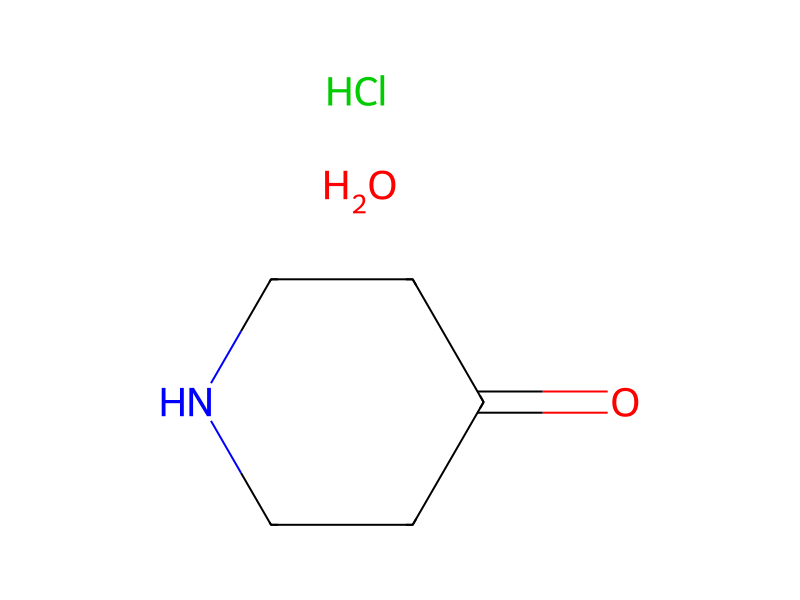



Procedure
Potassium carbonate (13.96 g, 101.1 mmol) and 3-chlorobenzenesulfonyl chloride were continuously added to a two-phase solution of 4-piperidone hydrochloride hydrate (6.06 g, 39.48 mmol) in chloroform (47.4 mL) and water (47.4 mL), and the mixture was stirred at room temperature. A saturated aqueous sodium bicarbonate solution was added, and the organic layer and the aqueous layer were separated. The aqueous layer was then further extracted with dichloromethane. The organic layers were combined, dried over anhydrous sodium sulfate and then concentrated under reduced pressure. The resulting solid was washed with n-hexane and then collected by filtration and dried under reduced pressure to give 1-(3-chloro-benzenesulfonyl)-piperidin-4-one as a white solid (10.5 g, 97%).
Workup
- customthe organic layer and the aqueous layer were separated
- extractionThe aqueous layer was then further extracted with dichloromethane
- dry with materialdried over anhydrous sodium sulfate
- concentrationconcentrated under reduced pressure
- washThe resulting solid was washed with n-hexane
- filtrationcollected by filtration
- customdried under reduced pressure
Sources & evidence
- ORD record
- ord-b2a8a1c12b154936a9accdbb7a134f55
- Source dataset
- uspto-grants-2015_10
- Patent number
- US09169254B2
Reaction notes
Loading…