Phenacyl bromide → 5-Bromo-2,3-dimethyl-7-phenacyl pyrrolo[2,3-b]pyridine
Reaction equation

[Br:1][C:2]1[CH:3]=[C:4]2[C:10]([CH3:11])=[C:9]([CH3:12])[NH:8][C:5]2=[N:6][CH:7]=1.BrC1N=C2NC(C)=C(C)C2=CC=1.[CH2:25](Br)[C:26]([C:28]1[CH:33]=[CH:32][CH:31]=[CH:30][CH:29]=1)=[O:27]>CC#N>[Br:1][C:2]1[CH:3]=[C:4]2[C:10]([CH3:11])=[C:9]([CH3:12])[N:8]=[C:5]2[N:6]([CH2:25][C:26]([C:28]2[CH:33]=[CH:32][CH:31]=[CH:30][CH:29]=2)=[O:27])[CH:7]=1Participants
5
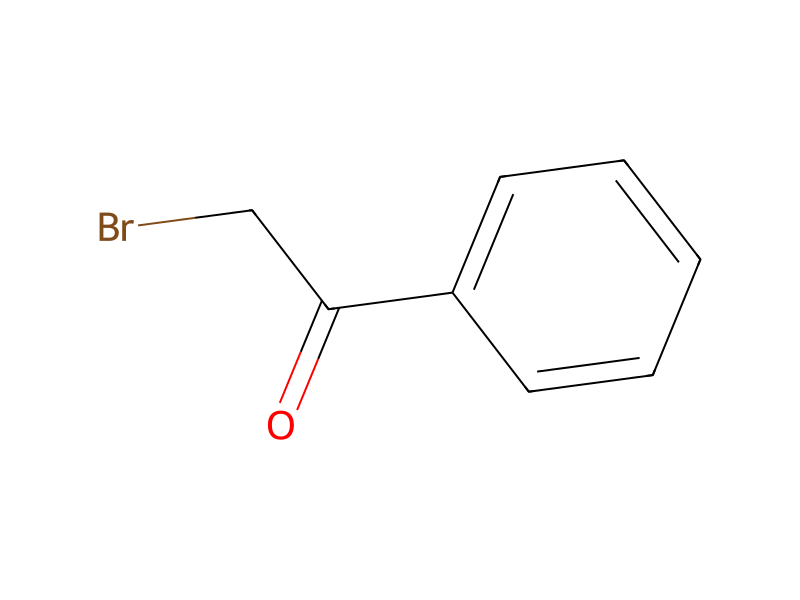



Procedure
A solution of 5-bromo-2,3 -dimethyl-pyrrolo [2,3 -b]pyridine (prepared in a similar manner as 6-bromo-2,3-dimethyl-pyrrolo[2,3-b]pyridine (200 mg, 0.9 mmol) and phenacyl bromide (200 mg, 1.3 mmol) in 15 ml CH3CN was refluxed for 16 h. The mixture was allowed to cool and the precipitated product filtered off and washed with a small volume of diethyl ether affording 243 mg (72%) pure title compound as the hydrochloride.
Workup
- temperaturewas refluxed for 16 h
- temperatureto cool
- filtrationthe precipitated product filtered off
- washwashed with a small volume of diethyl ether affording 243 mg (72%) pure title compound as the hydrochloride
Sources & evidence
- ORD record
- ord-fe6df80c6c8c452795d8770868e1bca0
- Source dataset
- uspto-grants-1995_08
- Patent number
- US05439917
Reaction notes
Loading…