Acetic Acid → HCID 131719077, compound
Reaction equation

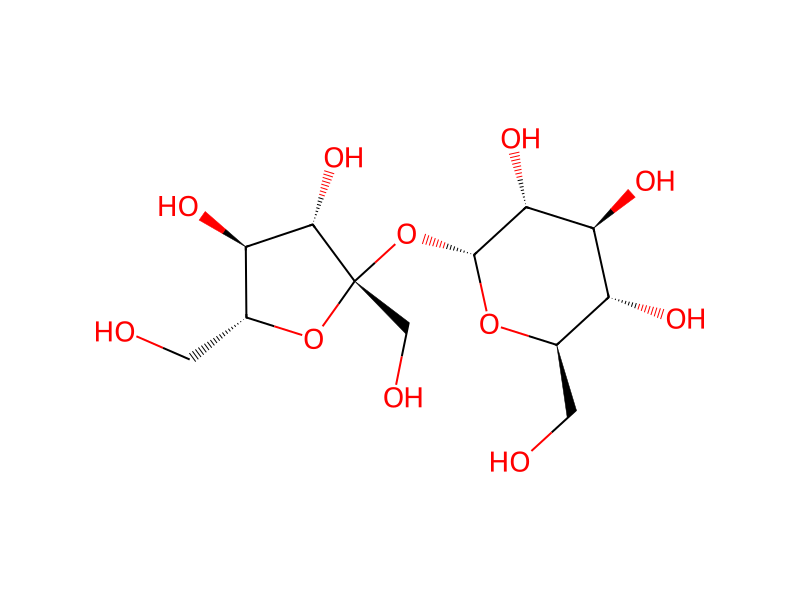
[CH2:1]([OH:23])[C@H:2]1[O:7][C@H:6]([O:8][C@:9]2([CH2:18][OH:19])[O:13][C@H:12]([CH2:14][OH:15])[C@@H:11]([OH:16])[C@@H:10]2[OH:17])[C@H:5]([OH:20])[C@@H:4]([OH:21])[C@@H:3]1[OH:22].[C:24]([OH:27])(=[O:26])[CH3:25].C1(C)C=CC(S(O)(=O)=O)=CC=1.C(=O)([O-])[O-].[Na+].[Na+]>>[CH2:1]([OH:23])[C@H:2]1[O:7][C@H:6]([O:8][C@:9]2([CH2:18][OH:19])[O:13][C@H:12]([CH2:14][OH:15])[C@@H:11]([OH:16])[C@@H:10]2[OH:17])[C@H:5]([OH:20])[C@@H:4]([OH:21])[C@@H:3]1[OH:22].[C:24]([O-:27])(=[O:26])[CH3:25]Participants
5




Conditions
- Temperature
- 100 °C
Procedure
Sucrose (34.2 g; 0.1 moles) can be mixed with acetic acid (50 g; 0.83 moles) and p-toluenesulfonic acid (0.2 g; 0.001 moles). The reaction mixture can then be heated to 100° C. for three hours. Sodium carbonate (0.1 g; 0.001 moles) can be added in order to neutralize the acid catalyst. Excess acetic acid can be removed at reduced pressure in a rotary evaporator. About 40 g of a partially esterified sucrose acetate (about 95 percent yield) containing about 70 weight percent sucrose diacetate and about 15 weight percent sucrose triacetate should be obtained.
Workup
- customExcess acetic acid can be removed at reduced pressure in a rotary evaporator
Sources & evidence
- ORD record
- ord-3845ed03c4dd45f4ba7da911f3547a42
- Source dataset
- uspto-grants-1995_08
- Patent number
- US05440027
Reaction notes
Loading…