Hydrochloric Acid → Tributylphosphine oxide
Reaction equation

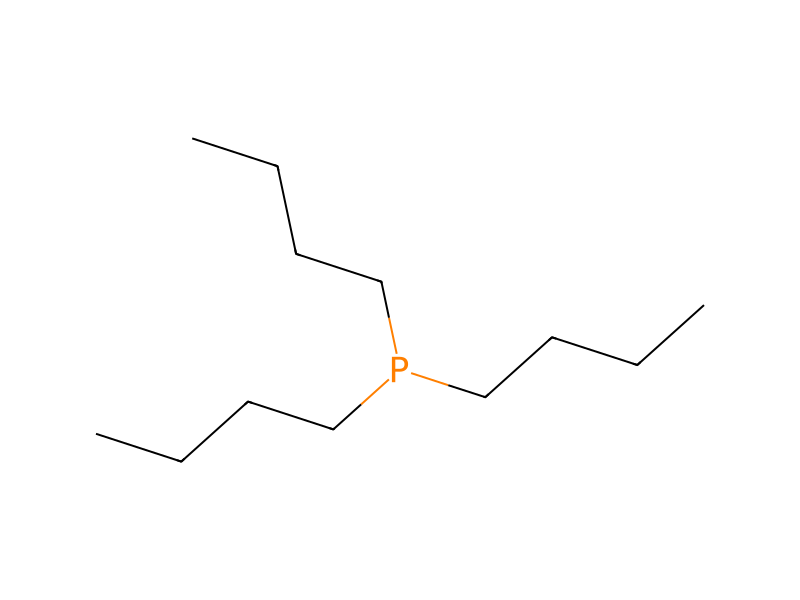
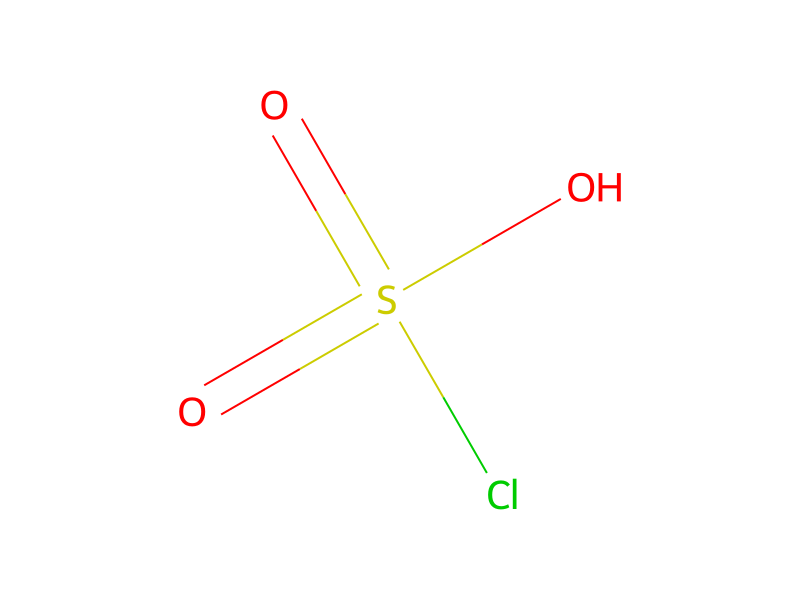
ClS(O)(=O)=[O:3].[CH2:6]([P:10]([CH2:15][CH2:16][CH2:17][CH3:18])[CH2:11][CH2:12][CH2:13][CH3:14])[CH2:7][CH2:8][CH3:9].Cl>>[CH2:15]([P:10](=[O:3])([CH2:6][CH2:7][CH2:8][CH3:9])[CH2:11][CH2:12][CH2:13][CH3:14])[CH2:16][CH2:17][CH3:18]Participants
4


Procedure
116.5 g (1 mol) chlorosulfonic acid was placed in an apparatus as described in Example 4 and reacted therein within 60 minutes with 208 g (1 mol) tributylphosphane at 18°-20° C. while cooling with ice. Towards the end of the reaction when cooling was stopped, the reaction temperature rose to 34° C. The whole was stripped at 70° C. under a pressure of 0.5 millibar. This was accompanied by a violent exothermal reaction. The temperature rose up to 140° C. The material was stripped once again at 80° C. under a pressure of 1 millibar. 263 g tributylphosphane oxide was obtained in the form of a HCl-adduct (determined by elementary analysis and 31P -NMR-spectroscopy). 90% P was in the form of a tributylphosphane oxide HCl-adduct.
Workup
- customreacted
- customTowards the end of the reaction when
- temperaturecooling
- customrose to 34° C
- customwas stripped at 70° C. under a pressure of 0.5 millibar
- customThis was accompanied by a violent exothermal reaction
- customrose up to 140° C
- customwas stripped once again at 80° C. under a pressure of 1 millibar
Sources & evidence
- ORD record
- ord-ab3d2636f15d431e897c498f551f08d6
- Source dataset
- uspto-grants-1983_02
- Patent number
- US04371509
Reaction notes
Loading…