Sodium Carbonate → 2-Chloro-5-Methoxynicotinonitrile
Reaction equation

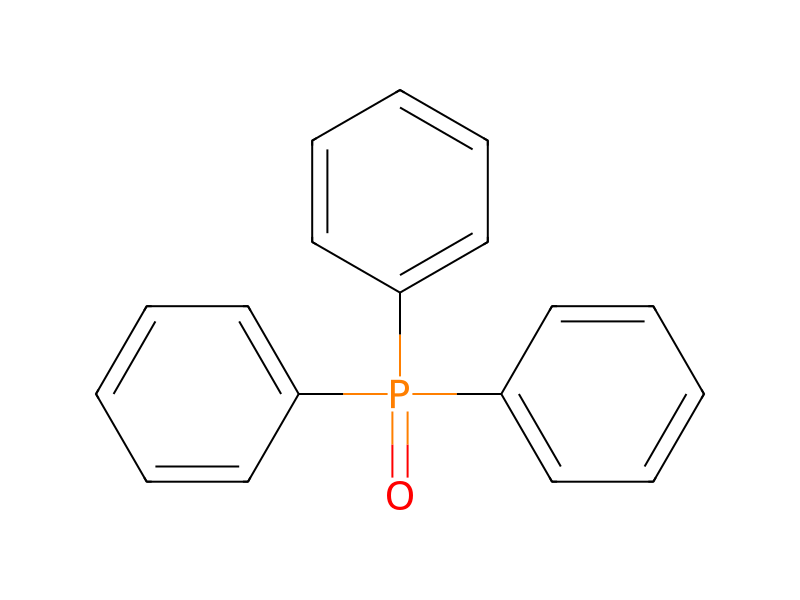
C1(P(=O)(C2C=CC=CC=2)C2C=CC=CC=2)C=CC=CC=1.S(OS(C(F)(F)F)(=O)=O)(C(F)(F)F)(=O)=O.[Cl:36][C:37]1[N:45]=[CH:44][C:43]([O:46][CH3:47])=[CH:42][C:38]=1[C:39]([NH2:41])=O.C([O-])([O-])=O.[Na+].[Na+]>C(Cl)Cl>[Cl:36][C:37]1[N:45]=[CH:44][C:43]([O:46][CH3:47])=[CH:42][C:38]=1[C:39]#[N:41]Participants




Procedure
Into a flame dried flask under N2 was placed triphenylphosphine oxide (12.0 g, 0.04 mol) and CH2Cl2 (50 mL) and the mixture cooled to 0°-4° C. A solution of triflic anhydride (6.75 ml, 0.04 mol) in CH2Cl2 (80 mL) was added dropwise. After the addition, the solution was stirred for 15 min. and 2-chloro-5-methoxynicotinamide (8.0 g, 0.04 mol) was added portionwise over 15 minutes. The mixture was allowed to warm to room temperature with stirring overnight, poured into saturated Na2CO3 solution and extracted with CHCl3 (2X). After concentration, the residue was chromatographed on silica gel and the product eluted with CHCl3 to yield 6.2 g (86%) of 2-chloro-5-methoxynicotinonitrile 1H NMR (CDCl3) δ 3.9 (3H, s), 7.5 (1H, d, J=3) and 8.3 (1H, d, J=3); (nujol) 2250 cm-1.
Workup
- customInto a flame dried flask under N2
- temperaturethe mixture cooled to 0°-4° C
- additionAfter the addition
- stirringwith stirring overnight
- extractionextracted with CHCl3 (2X)
- concentrationAfter concentration
- customthe residue was chromatographed on silica gel
- washthe product eluted with CHCl3
Sources & evidence
- ORD record
- ord-da550a4e0809425c87e37e5d3f8c01fb
- Source dataset
- uspto-grants-1983_02
- Patent number
- US04374140
Reaction notes
Loading…