Sodium Carbonate → Hexafluorophosphate
Reaction equation

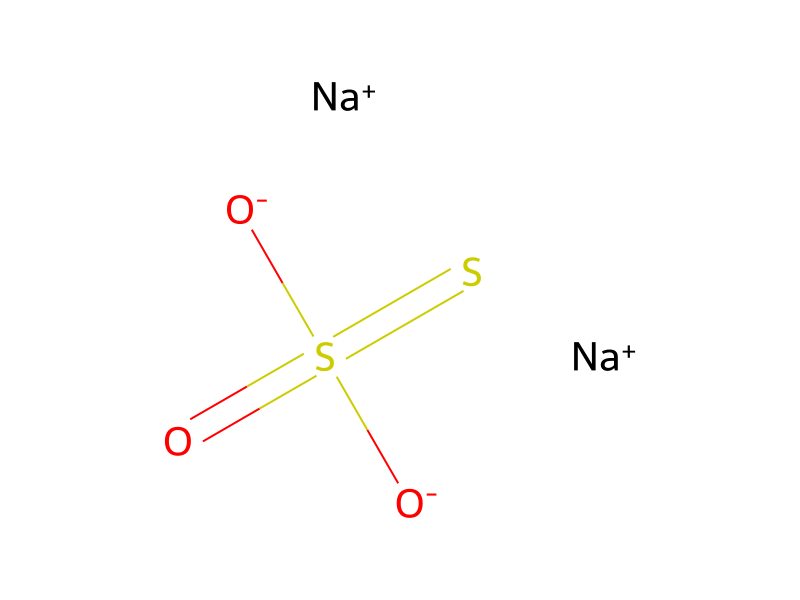
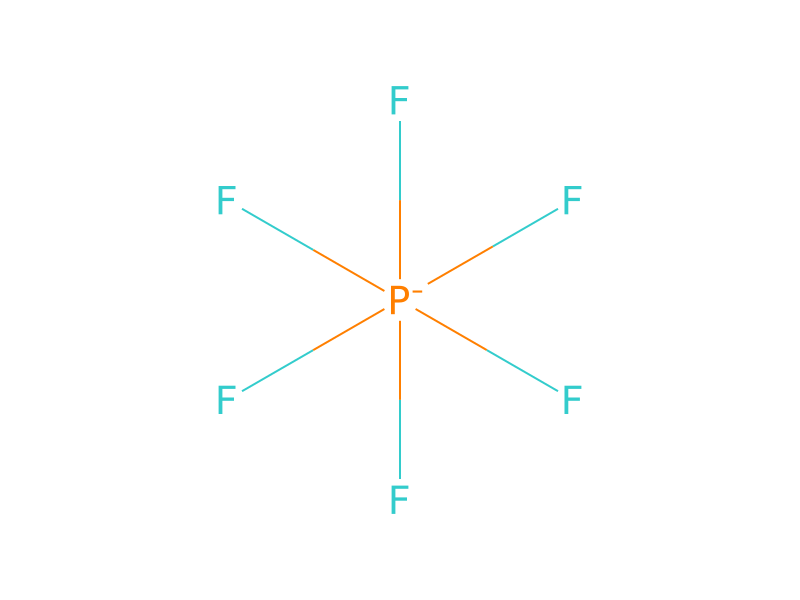
[F:1][P-:2]([F:7])([F:6])([F:5])([F:4])[F:3].[C:8]1([S+:14]([C:21]2[CH:26]=[CH:25][CH:24]=[CH:23][CH:22]=2)[C:15]2[CH:20]=[CH:19][CH:18]=[CH:17][CH:16]=2)[CH:13]=[CH:12][CH:11]=[CH:10][CH:9]=1.C(=O)([O-])[O-:28].[Na+].[Na+].ClC1C=C(C=CC=1)C(OO)=O.S([O-])([O-])(=O)=S.[Na+].[Na+]>O.CC(C)=O>[F:1][P-:2]([F:7])([F:6])([F:5])([F:4])[F:3].[C:21]1([S+:14]([C:8]2[CH:9]=[CH:10][CH:11]=[CH:12][CH:13]=2)([C:15]2[CH:20]=[CH:19][CH:18]=[CH:17][CH:16]=2)=[O:28])[CH:22]=[CH:23][CH:24]=[CH:25][CH:26]=1.[F:1][P-:2]([F:7])([F:6])([F:5])([F:4])[F:3]Participants
8
Reactant 4



Product 2

Reagents, catalysts & solvents 2


Conditions
- Temperature
- 20 °C
Procedure
A mixture consisting of 157 parts of acetone, 4 parts of triphenylsulphonium hexafluorophosphate, 8.48 parts of sodium carbonate, and 17.2 parts of m-chloroperoxybenzoic acid was stirred at 20° C. for 24 hours. A solution of 40 parts of sodium thiosulphate in 500 parts of water was added. The acetone was removed under reduced pressure and triphenylsulphoxonium hexafluorophosphate was filtered off and dried under vacuum at 50° C. The desired product thus obtained (V1, R7 =H, R6 =C6H4, p=zero, R8 =R9 =C6H5, r=1, Zr- =PF6-), had m.pt. 233°-238° C., NMR (acetone-d6) 7.8-8.3 (m); I.R. (KBr disc) 3100, 3070, 1450, 1225, 1080, 840, 760, 730, 685 cm-1 ; UV (ethanol) λmax 232 nm and 270 nm.
Workup
- customThe acetone was removed under reduced pressure and triphenylsulphoxonium hexafluorophosphate
- filtrationwas filtered off
- customdried under vacuum at 50° C
Sources & evidence
- ORD record
- ord-e623fa1a02a74d7f963d4caab15ac53b
- Source dataset
- uspto-grants-1982_07
- Patent number
- US04339567
Reaction notes
Loading…