Sodium Iodide → Benzyl acrylate
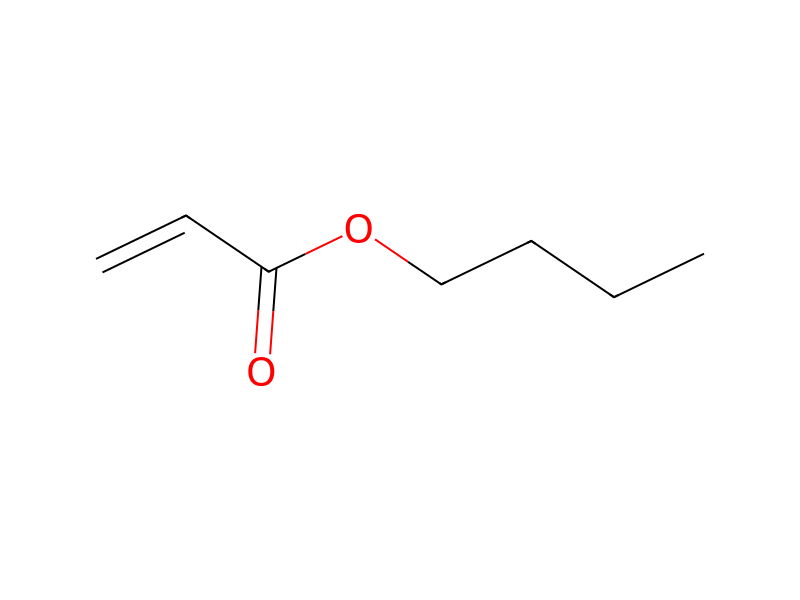
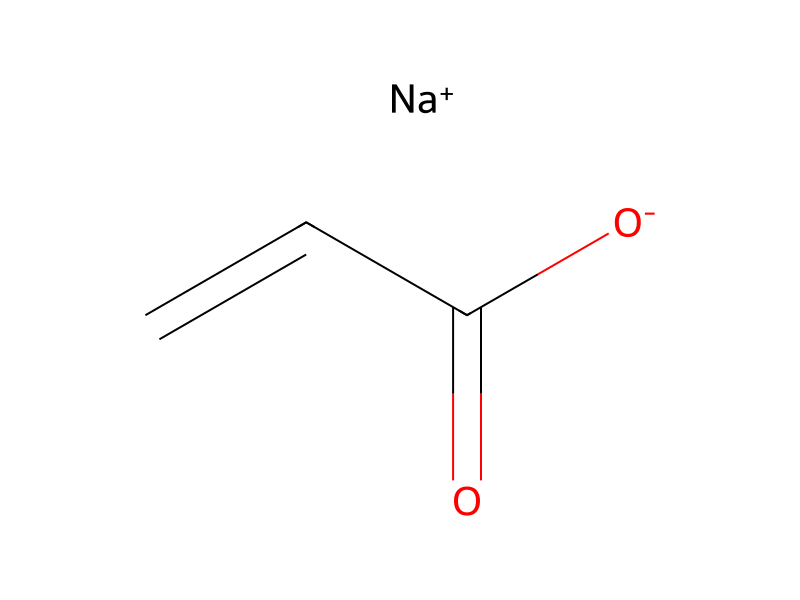
Reaction equation

[C:1]([O-:5])(=[O:4])[CH:2]=[CH2:3].[Na+].[I-].[Na+].[CH2:9](Cl)[C:10]1[CH:15]=[CH:14][CH:13]=[CH:12][CH:11]=1.C(OCCCC)(=O)C=C.C(C1C=C(C)C=C(C(C)(C)C)C=1O)(C)(C)C>CCCCCCCC[N+](CCCCCCCC)(CCCCCCCC)C.[Cl-].O>[C:1]([O:5][CH2:9][C:10]1[CH:15]=[CH:14][CH:13]=[CH:12][CH:11]=1)(=[O:4])[CH:2]=[CH2:3]Participants






Procedure
A mixture consisting of sodium acrylate (1.892 g, 20 millimoles, Aldrich, 97%), sodium iodide (0.298 g, 2 millimoles, Aldrich, 98%), and water (200.35 g) was introduced into a three-necked 500 mL flask. The flask was immersed into a water bath kept at 45° C. and the mixture was stirred mechanically (600 rpm, photo-tachometer). Next, an organic phase comprising benzyl chloride (10.128 g, 80 millimoles, Aldrich, 97%), Aliquat 336 (1.29 g, 3 millimoles, Aldrich), butyl acrylate (GC standard, 0.690 g, 5 millimoles, Aldrich, 99+%), and 2,6-di-t-butyl-4-methylphenol (0.045 g, 0.2 millimoles, Aldrich, 99+%) was added to the reactor and the mixture was stirred for 180 minutes at constant temperature. The organic phase:aqueous phase weight ratio was 1:17. The aliquot of the reaction mixture was centrifuged, the phases were separated and the organic phase was injected into the gas chromatographic column. The yield of benzyl acrylate based on the limiting reactant (sodium acrylate) was 59%. The only byproduct detectable in the reaction mixture was benzyl alcohol (less than 3%).
Workup
- additionwas introduced into a three-necked 500 mL flask
- customThe flask was immersed into a water bath
- customkept at 45° C.
- additionwas added to the reactor
- stirringthe mixture was stirred for 180 minutes at constant temperature
- customthe phases were separated
Sources & evidence
- ORD record
- ord-4ae32080589c4cde823f7df4f5d5cbd4
- Source dataset
- uspto-grants-2005_01
- Patent number
- US06846946B2
Reaction notes
Loading…