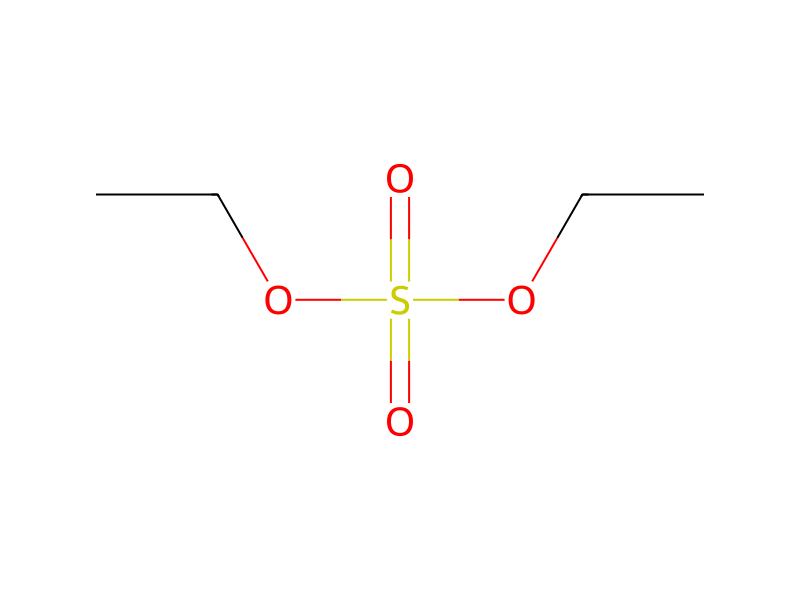
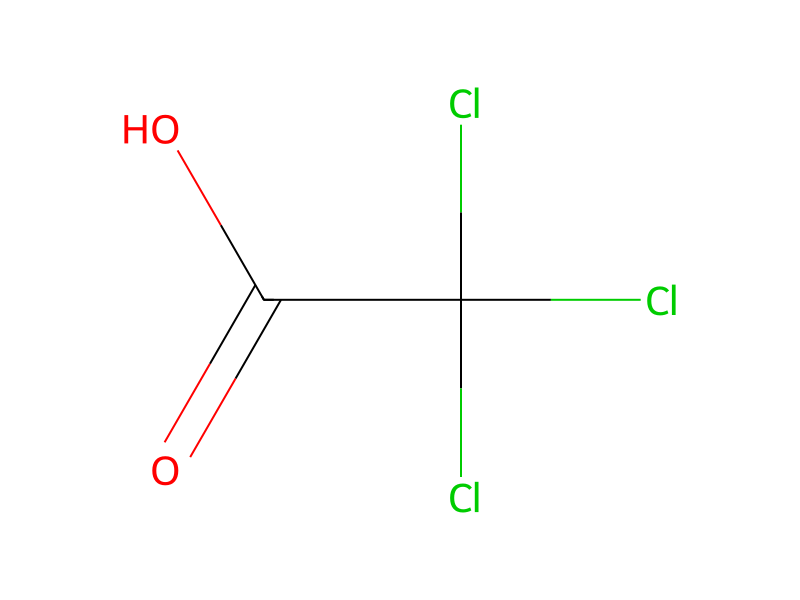
Diethyl Sulfate → Ethyl trichloroacetate
Reaction equation

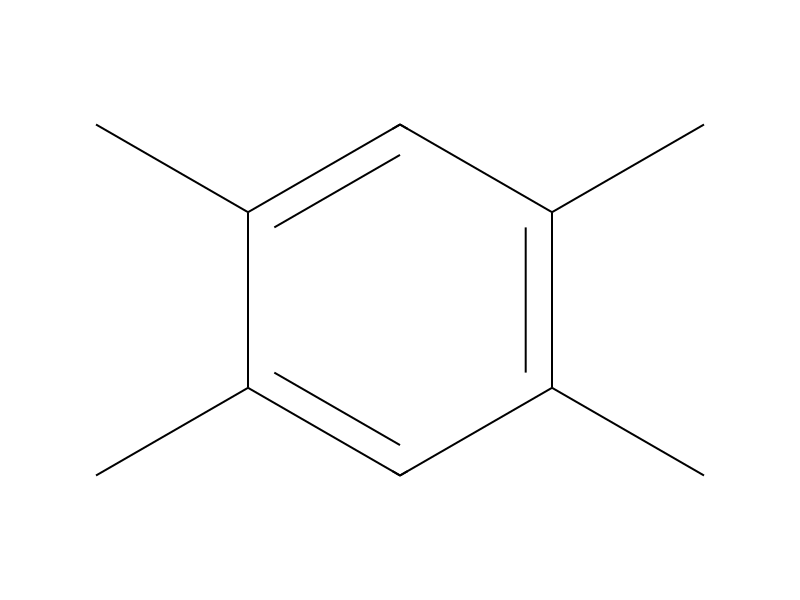
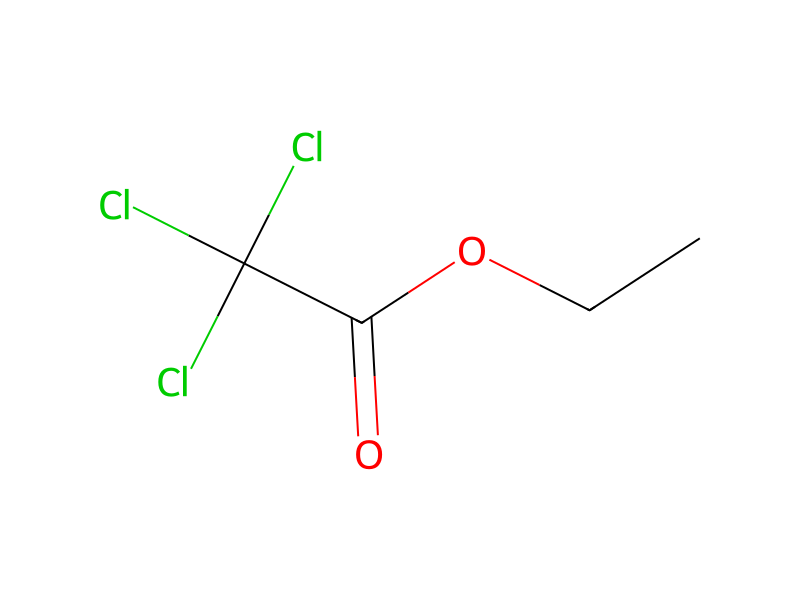
[Cl:1][C:2]([Cl:7])([Cl:6])[C:3]([OH:5])=[O:4].S(OCC)(O[CH2:12][CH3:13])(=O)=O.C1(C(=CC(=C(C=1)C)C)C)C>O.CCCCCCCC[N+](CCCCCCCC)(CCCCCCCC)C.[Cl-]>[Cl:1][C:2]([Cl:7])([Cl:6])[C:3]([O:5][CH2:12][CH3:13])=[O:4]Participants
Reactant 3
Product 1
Reagents, catalysts & solvents 2


Conditions
- Temperature
- 60 °C
Procedure
A solution of trichloroacetic acid (3.33 g, 20 millimoles, Sigma, 99.0+%) in water (171.02 g) was introduced into a three-necked 500 mL flask and warmed up to 60° C. when mechanically stirred (600 rpm). Next, the organic phase consisting of diethyl sulfate (15.49 g, 100 millimoles, Aldrich, 99+%), Adogen 464 (0.90 g, 2 millimoles, Aldrich), and durene (chromatographic standard, 0.652 g, 5 millimoles. Aldrich, 98%) was added to the flask. The organic phase:aqueous phase weight ratio was 1:10. Since diethyl sulfate decomposes in water, the reaction mixture was stirred at 60° C. for 30 minutes. Then, the reaction was stopped and an aliquot of the organic phase was centrifuged to remove the aqueous phase and injected into the gas chromatographic column. The yield of ethyl trichloroacetate based on the limiting reactant (trichloroacetic acid) was 15%. No other products were present in the chromatogram.
Workup
- additionwas added to the flask
- stirringthe reaction mixture was stirred at 60° C. for 30 minutes
- customto remove the aqueous phase
Sources & evidence
- ORD record
- ord-36e614d50b854e42b6e85a5ab87112bd
- Source dataset
- uspto-grants-2005_01
- Patent number
- US06846946B2
Reaction notes
Loading…