Diethylamine → HCID 86742971, compound
Reaction equation

[CH3:1][N:2]1[C:16]2[C:17]3[C:4]([CH2:5][C@@H:6]4[C:11]([C:12]=3[CH:13]=[CH:14][CH:15]=2)=[CH:10][C@H:9]([NH2:18])[CH2:8][N:7]4[CH3:19])=[CH:3]1.[C:20]([N:27]1[CH:31]=[CH:30]N=[CH:28]1)(N1C=CN=C1)=[S:21].[CH2:32](NCC)C>>[CH3:1][N:2]1[C:16]2[C:17]3[C:4]([CH2:5][C@@H:6]4[C:11]([C:12]=3[CH:13]=[CH:14][CH:15]=2)=[CH:10][C@H:9]([NH:18][C:20](=[S:21])[N:27]([CH2:31][CH3:30])[CH2:28][CH3:32])[CH2:8][N:7]4[CH3:19])=[CH:3]1Participants
4



Procedure
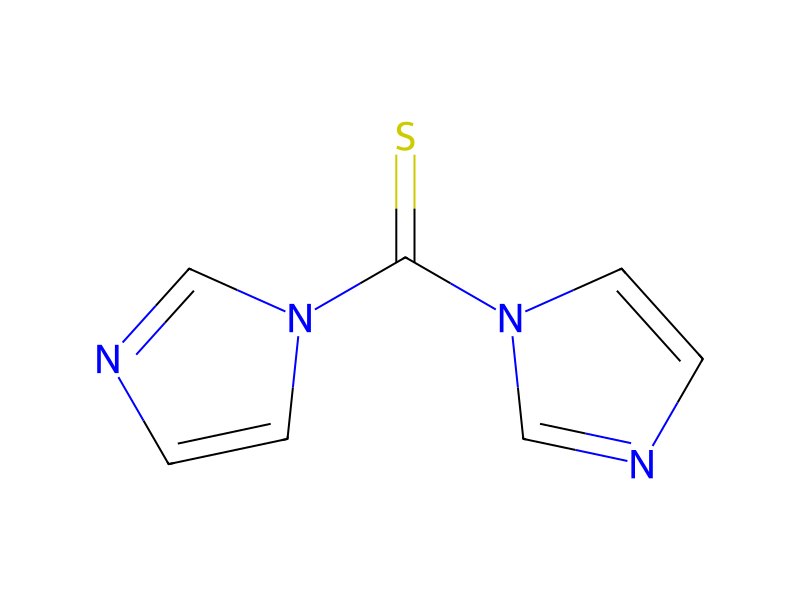
One millimole of 9,10-didehydro-1,6-dimethylergoline-8α-amine is reacted with 1,1'-thiocarbonyldiimidazole and diethylamine, as described in Example 11, to 3-(9,10-didehydro-1,6-dimethyl-8α-ergolinyl)-1,1-diethylthioruea. After chromatography, 3-(9,10-didehydro-1,6-dimethyl-8α-ergolinyl)-1,1-diethylthiourea is obtained in a 67% yield. By dissolution with the equivalent quantity of L-tartaric acid in methylene chloride and methanol, 3-(9,10-didehydro-1,6-dimethyl-8α-ergolinyl)-1,1-diethylthiourea tartrate is obtained.
Sources & evidence
- ORD record
- ord-0ac20891448b4f319e2e462c4b5263e4
- Source dataset
- uspto-grants-1989_05
- Patent number
- US04826852
Reaction notes
Loading…