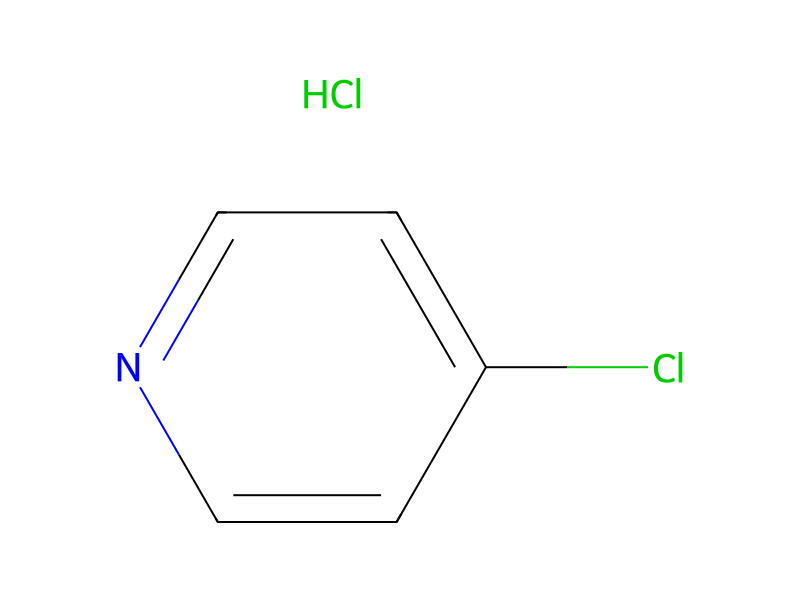
4-Chloropyridine hydrochloride → 4-[1-(4-Pyridyl)piperidin-4-yl]benzenesulphonamide
Reaction equation

[NH:1]1[CH2:6][CH2:5][CH:4]([C:7]2[CH:12]=[CH:11][C:10]([S:13]([NH2:16])(=[O:15])=[O:14])=[CH:9][CH:8]=2)[CH2:3][CH2:2]1.Cl.Cl[C:19]1[CH:24]=[CH:23][N:22]=[CH:21][CH:20]=1.C(=O)(O)[O-].[Na+]>C(O)CC(C)C>[N:22]1[CH:23]=[CH:24][C:19]([N:1]2[CH2:6][CH2:5][CH:4]([C:7]3[CH:12]=[CH:11][C:10]([S:13]([NH2:16])(=[O:14])=[O:15])=[CH:9][CH:8]=3)[CH2:3][CH2:2]2)=[CH:20][CH:21]=1Participants
5



Procedure
A mixture of the product of part (iii) above (3.75 g), 4-chloropyridine hydrochloride (2.34 g), sodium bicarbonate (3.93 g) and isoamyl alcohol (60 ml) was heated under reflux for 30 hours and then evaporated. The residue was triturated with water and the mixture was filtered. The solid was washed well with water and crystallised from methanol/water to give the title compound (0.43 g), m.p. 295° (with decomp).
Workup
- temperaturewas heated
- temperatureunder reflux for 30 hours
- customevaporated
- customThe residue was triturated with water
- filtrationthe mixture was filtered
- washThe solid was washed well with water
- customcrystallised from methanol/water
Sources & evidence
- ORD record
- ord-974fcb6d8bc84ab8b2bb8ac014e34672
- Source dataset
- uspto-grants-1989_05
- Patent number
- US04835165
Reaction notes
Loading…