Hydrochloric Acid → Methyl 4-(bromoacetyl)-7-methoxy-1H-indole-2-carboxylate
Reaction equation

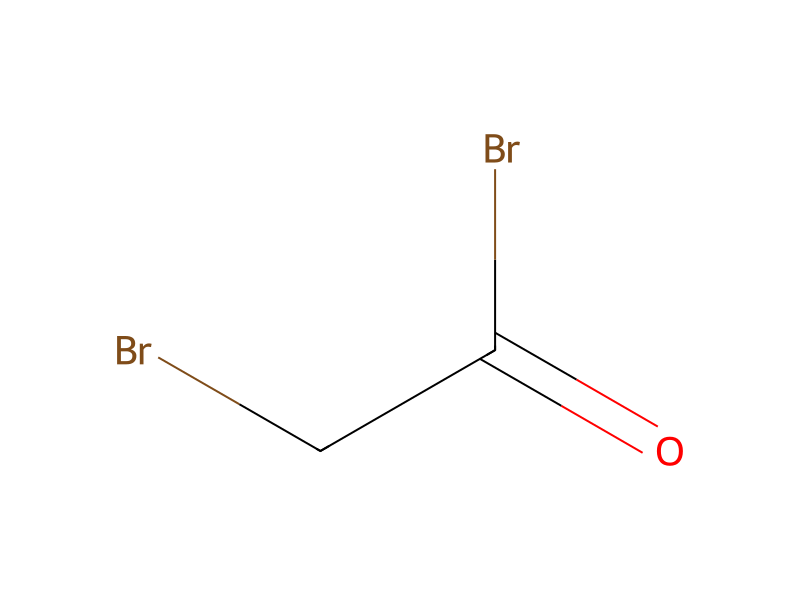
[CH3:1][O:2][C:3]([C:5]1[NH:6][C:7]2[C:12]([CH:13]=1)=[CH:11][CH:10]=[CH:9][C:8]=2[O:14][CH3:15])=[O:4].[Cl-].[Al+3].[Cl-].[Cl-].[Br:20][CH2:21][C:22](Br)=[O:23].Cl>ClCCl>[CH3:1][O:2][C:3]([C:5]1[NH:6][C:7]2[C:12]([CH:13]=1)=[C:11]([C:22](=[O:23])[CH2:21][Br:20])[CH:10]=[CH:9][C:8]=2[O:14][CH3:15])=[O:4]Participants
6





Procedure
A-2. A solution of 1.02 g of 7-methoxyindole--2carboxylic acid methyl ester in 25 ml of dichloromethane is combined with 2 g of aluminum chloride and 0.65 ml of bromoacetyl bromide and the mixture is heated for 3 hours under reflux. The reaction mixture is allowed to cool and poured into 100 ml of a mixture of equal parts of ice water and concentrated hydrochloric acid. The organic phase is separated, concentrated to dryness under vacuum, and recrystallization from acetonitrile yields 650 mg of 4-bromoacetyl-7-methoxyindole-2-carboxylic acid methyl ester, mp 197°-201° C.
Workup
- temperaturethe mixture is heated for 3 hours
- temperatureunder reflux
- temperatureto cool
- customThe organic phase is separated
- concentrationconcentrated to dryness under vacuum, and recrystallization from acetonitrile
Sources & evidence
- ORD record
- ord-e25929d31f264d17bd7f1cb3a51b0a23
- Source dataset
- uspto-grants-1989_05
- Patent number
- US04835175
Reaction notes
Loading…