Hydrochloric Acid → 4-(1H-benzimidazol-2-yl)phenol
Reaction equation

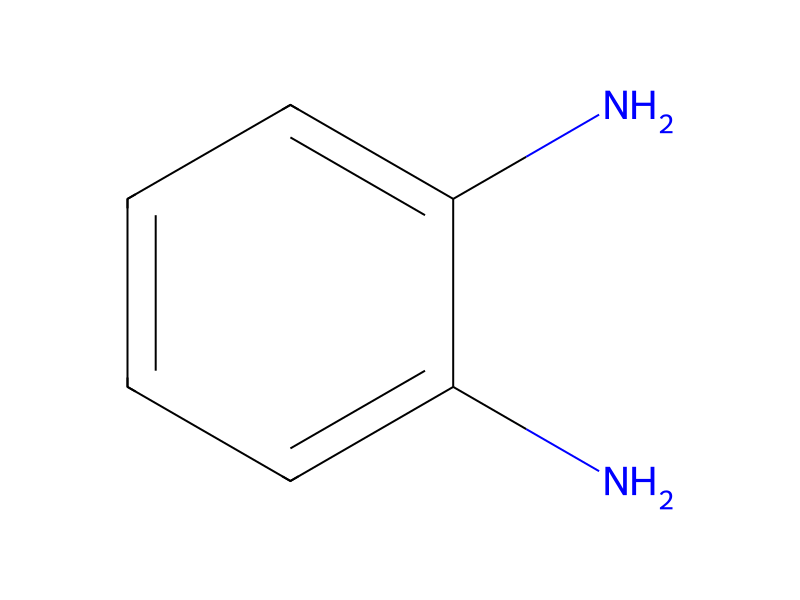
C(OC1C=CC(C([NH:11][C:12]2[CH:17]=[CH:16][CH:15]=[CH:14][C:13]=2[NH:18][C:19](=O)[C:20]2[CH:25]=[CH:24][C:23]([O:26]CCC)=[CH:22][CH:21]=2)=O)=CC=1)CC.C(OC1C=CC(C(Cl)=O)=CC=1)CC.C1(N)C=CC=CC=1N.Cl.C(=O)(O)[O-].[Na+]>>[OH:26][C:23]1[CH:24]=[CH:25][C:20]([C:19]2[NH:11][C:12]3[CH:17]=[CH:16][CH:15]=[CH:14][C:13]=3[N:18]=2)=[CH:21][CH:22]=1Participants




Procedure
N,N'-Bis(p-propoxybenzoyl)-o-phenylenediamine (m.p. 196° C.) [prepared in 86% yield from p-propoxybenzoyl chloride and o-phenylenediamine was heated (200° C.) for four hours with concentrated hydrochloric acid. Mixture was cooled, neutralized with sodium bicarbonate and filtered. Recrystallization from ethanol gave 2-(p-hydroxyphenyl)benzimidazole (Yield 76%, m.p. 286°-288° C.). A well stirred mixture of 2-(p-hydroxyphenyl)benzimidazole (0.1 mole), iodoethane (0.1 mole) and sodium bicarbonate (0.12 mole) in 200 ml of acetone was refluxed overnight, filtered and the acetone removed on the steam bath. The isolated 2-(p-hydroxyphenyl)-1-methylbenzimidazole was reacted with 4-(2-bromoethoxy)-2-hydroxybenzophenone as in Example 1 to produce 4-{2-[4-(1-ethyl-2-benzimidazolyl)phenoxy]ethoxy}-2-hydroxybenzophenone.
Workup
- temperatureMixture was cooled
- filtrationfiltered
- customRecrystallization from ethanol
Sources & evidence
- ORD record
- ord-aa3250046373413b8d9e8b89a8a403c5
- Source dataset
- uspto-grants-1978_09
- Patent number
- US04115348
Reaction notes
Loading…