Triethylamine → 2-Bromo-5-fluoro-N-methoxy-N-methylbenzamide
Reaction equation

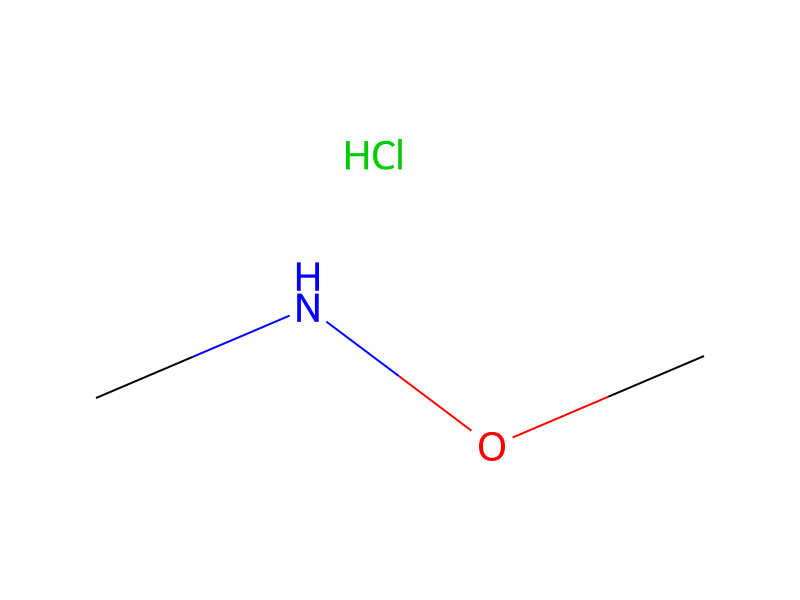
[Br:1][C:2]1[CH:10]=[CH:9][C:8]([F:11])=[CH:7][C:3]=1[C:4](O)=[O:5].Cl.[CH3:13][NH:14][O:15][CH3:16].C(N(CC)CC)C.C1(P(C2C=CC=CC=2)C2C=CC=CC=2)C=CC=CC=1>C(Cl)Cl>[Br:1][C:2]1[CH:10]=[CH:9][C:8]([F:11])=[CH:7][C:3]=1[C:4]([N:14]([O:15][CH3:16])[CH3:13])=[O:5]Participants





Procedure
2-Bromo-5-fluorobenzoic acid (4.60 g, 0.02 mol), N,O-Dimethylhydroxylamine hydrochloride (2.05 g, 0.02 mol), carbon tertabromide (6.9 g, 0.02 mol) was added to mixture of methylene chloride (100 mL) and triethylamine (2.9 mL, 0.02 mol). Triphenylphospine (5.53 g, 0.02 mol) was added to the solution over 1 hour and stirred for another 1 hour. The solution was concentrated to an oil. Hexanes (100 mL) and Ethyl Acetate (100 mL) were added to the oil and stirred for 1 hour then filtered. The filtrate was concentrated and the residue was purified by chromatography (Hexanes/Ethyl Acetate) on silica gel to afford 2-bromo-5-fluoro-N-methoxy-N-methylbenzamide as a foamy white solid in 73% yield. 1H NMR (CDCl3, 500 MHz) δ3.00-3.98 (m, 6 H), 6.97-7.08 (m, 2H), 7.51-7.54 (m, 1H).
Workup
- concentrationThe solution was concentrated to an oil
- additionHexanes (100 mL) and Ethyl Acetate (100 mL) were added to the oil
- stirringstirred for 1 hour
- filtrationthen filtered
- concentrationThe filtrate was concentrated
- customthe residue was purified by chromatography (Hexanes/Ethyl Acetate) on silica gel
Sources & evidence
- ORD record
- ord-4e87e0b2dfe74e80acfec4a9a9307f5c
- Source dataset
- uspto-grants-2007_06
- Patent number
- USRE039679E1
Reaction notes
Loading…