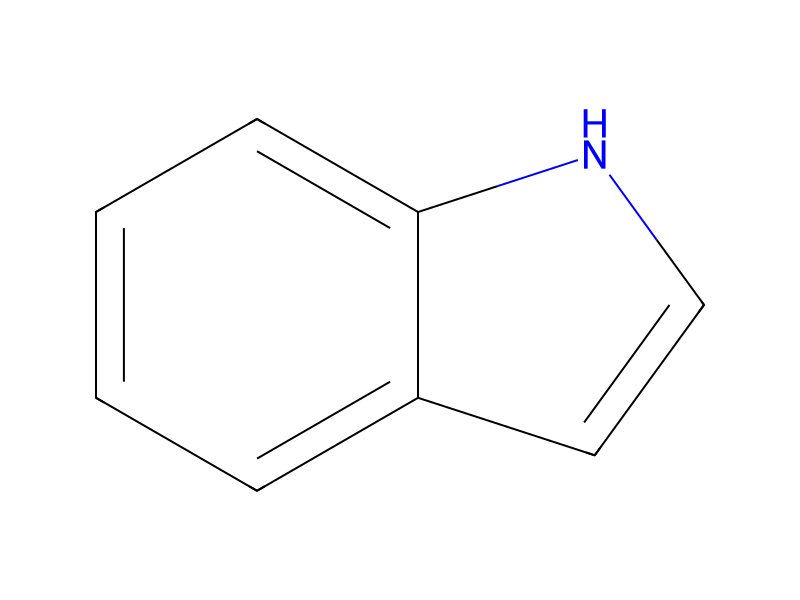
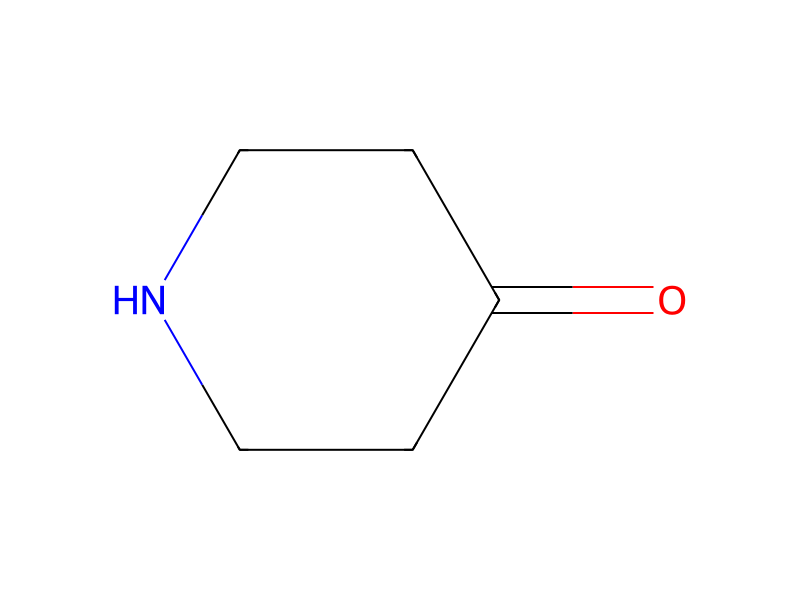
Indole → 3-(1,2,3,6-Tetrahydropyridin-4-yl)-1H-indole
Reaction equation

[NH:1]1[C:9]2[C:4](=[CH:5][CH:6]=[CH:7][CH:8]=2)[CH:3]=[CH:2]1.[NH:10]1[CH2:15][CH2:14][C:13](=O)[CH2:12][CH2:11]1>>[NH:10]1[CH2:11][CH:12]=[C:13]([C:3]2[C:4]3[C:9](=[CH:8][CH:7]=[CH:6][CH:5]=3)[NH:1][CH:2]=2)[CH2:14][CH2:15]1Participants

Procedure
Alternately, for example in step a, an appropriate indole of formula (1) is condensed with an appropriate piperid-4-one of formula (2) to give a 3-(1,2,3,6-tetrahydropyridin-4-yl)-1H-indole of formula (3). The reaction may carried out in the presence of a suitable acid, typically phosphoric acid or sulfuric acid. The reaction is carried out in a suitable solvent, such as acetic acid and water. Typically, about 2-6 molar equivalents of the piperid-4-one of formula (2) are used. The reaction is generally carried out at temperatures of about 40° C. to 100° C. The reaction typically requires 8-72 hours. In general, the acidic conditions are favored for the condensation above compounds of formula (1) having a 5-hydroxy. The product can be isolated and purified by techniques well known in the art, such as precipitation, filtration, extraction, evaporation, trituration, chromatography, and recrystallization.
Sources & evidence
- ORD record
- ord-37259ad5c35b4beda175ce8ba1a9ae81
- Source dataset
- uspto-grants-2007_06
- Patent number
- US07230011B2
Reaction notes
Loading…