Pyridine → HCID 23036667, compound
Reaction equation

[C:1]([O:6][CH2:7][CH3:8])(=[O:5])[C:2]([CH3:4])=[O:3].N1C=CC=CC=1.[C:15](Cl)(=[O:23])[CH2:16][CH2:17][CH2:18][CH2:19][CH2:20][CH2:21][CH3:22].C(=O)([O-])O.[Na+]>C(OCC)C>[C:15]([O:3][C:2](=[CH2:4])[C:1]([O:6][CH2:7][CH3:8])=[O:5])(=[O:23])[CH2:16][CH2:17][CH2:18][CH2:19][CH2:20][CH2:21][CH3:22]Participants
Reactant 4


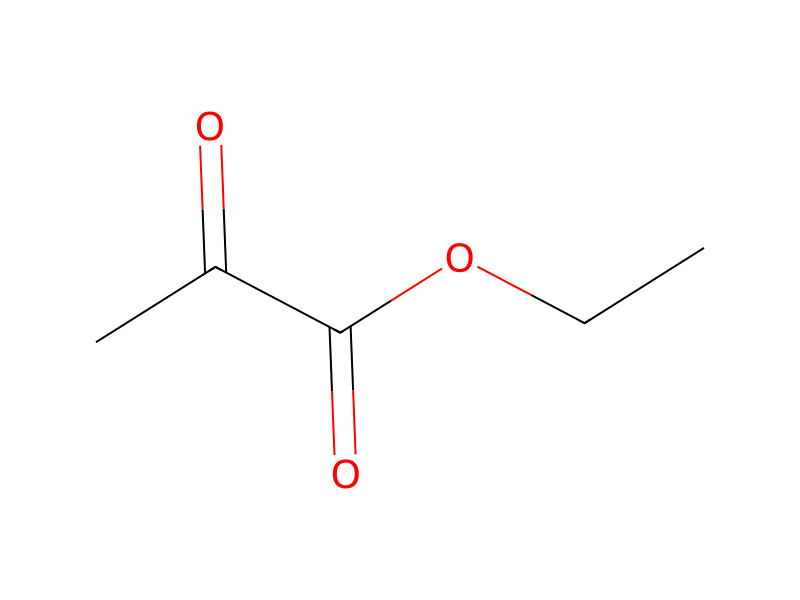

Product 1

Reagents, catalysts & solvents 1

Conditions
- Temperature
- 0 °C
Procedure
While ethyl pyruvate (174 g, 1.5 mol) was being stirred at 0° C., pyridine (120 g, 1.5 mol) was dropped into the ethyl pyruvate. After it was stirred at 0° C. for 10 minutes, octanoyl chloride (243 g, 1.5 mol) was slowly dropped into this mixture. After the temperature of the reaction solution reached room temperature, the reaction solution was stirred for 48 hours. An aqueous solution of saturated sodium hydrogencarbonate and diethyl ether were added to the reaction solution, and an organic layer was separated by use of a separating funnel. Diethyl ether was again added to an aqueous layer and an organic compound was extracted. The obtained organic layer was then mixed with the organic compound, and sodium sulfate was added for dehydration. Thereafter, the sodium sulfate was removed by filtration and the solvent was removed by use of an evaporator under a reduced pressure. The concentrate was distilled under a reduced pressure (1 mmHg, 95 to 100° C.) to give ethyl α-octanoyloxyacrylate (126 g, yield: 34%).
Workup
- customreached room temperature
- stirringthe reaction solution was stirred for 48 hours
- customan organic layer was separated by use of a separating funnel
- additionDiethyl ether was again added to an aqueous layer
- extractionan organic compound was extracted
- additionThe obtained organic layer was then mixed with the organic compound, and sodium sulfate
- additionwas added for dehydration
- customThereafter, the sodium sulfate was removed by filtration
- customthe solvent was removed by use of an evaporator under a reduced pressure
- distillationThe concentrate was distilled under a reduced pressure (1 mmHg, 95 to 100° C.)
Sources & evidence
- ORD record
- ord-10b4a63b78ea4673a870709da749a02a
- Source dataset
- uspto-grants-2007_06
- Patent number
- US07230062B2
Reaction notes
Loading…