Diethyl Ether → HCID 2809345, compound
Reaction equation

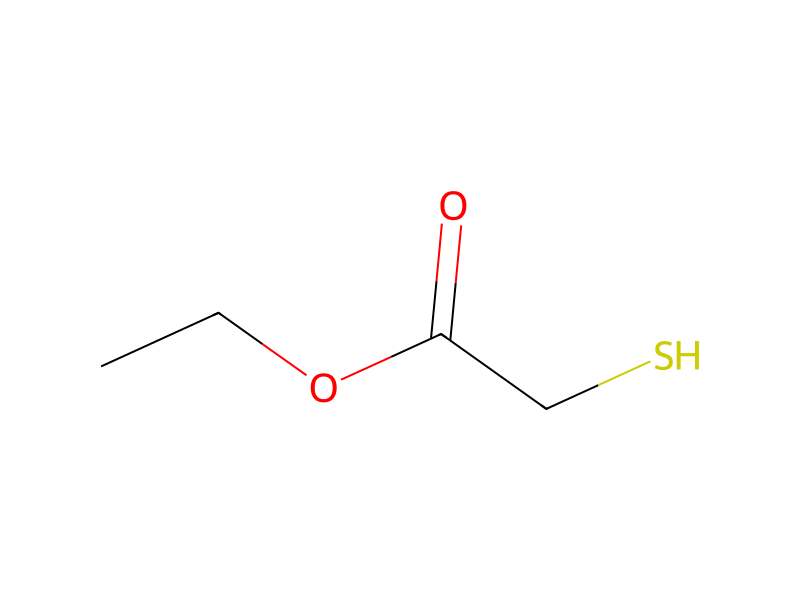
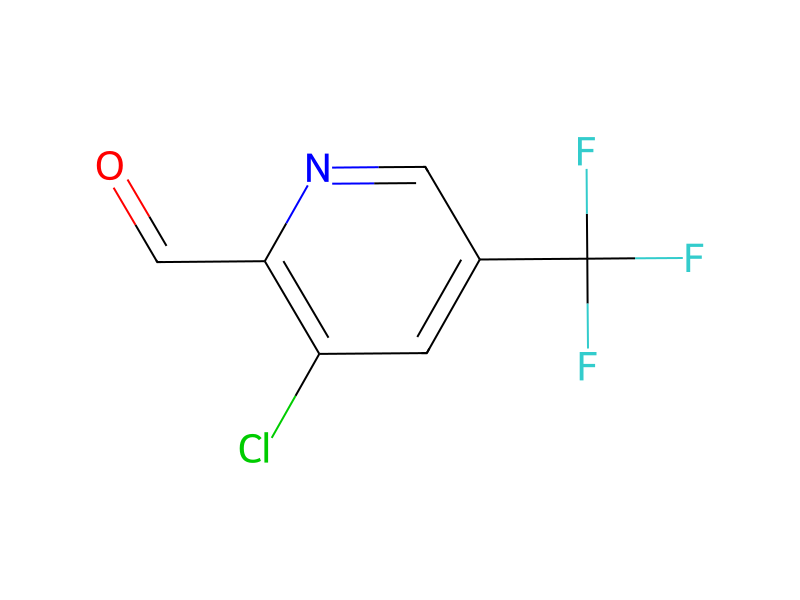
Cl[C:2]1[C:3]([CH:12]=O)=[N:4][CH:5]=[C:6]([C:8]([F:11])([F:10])[F:9])[CH:7]=1.C(=O)([O-])[O-].[K+].[K+].[SH:20][CH2:21][C:22]([O:24][CH2:25][CH3:26])=[O:23].C(OCC)C>CN(C)C=O.ClCCl>[F:11][C:8]([F:9])([F:10])[C:6]1[CH:7]=[C:2]2[S:20][C:21]([C:22]([O:24][CH2:25][CH3:26])=[O:23])=[CH:12][C:3]2=[N:4][CH:5]=1Participants





Conditions
- Temperature
- 50 °C
Procedure
3-Chloro-5-(trifluoromethyl)-2-pyridinecarbaldehyde (Chemical Abstracts number 175277-50-6, purchase from Maybridge), potassium carbonate (4.95 g), and ethyl mercaptoacetate (2.52 g) were combined in N,N-dimethylformamide (25 mL) at 25° C. and stirred for 18 hours. The mixture was then heated at 50° C. for 6 hours, allowed to cool to room temperature, poured into a mixture of diethyl ether (80 mL) and dichloromethane (25 mL), and washed with aqueous sodium carbonate. The organic phase was dried over sodium sulfate, filtered, and the filtrate concentrated under reduced pressure. The residue was dissolved in dichloromethane and filtered to remove solids. The filtrate was concentrated and the residue purified by flash chromatography (dichloromethane) to provide the title compound. MS (DCI/NH3) m/z 276.0 (M+H)+.
Workup
- temperatureto cool to room temperature
- washwashed with aqueous sodium carbonate
- dry with materialThe organic phase was dried over sodium sulfate
- filtrationfiltered
- concentrationthe filtrate concentrated under reduced pressure
- dissolutionThe residue was dissolved in dichloromethane
- filtrationfiltered
- customto remove solids
- concentrationThe filtrate was concentrated
- customthe residue purified by flash chromatography (dichloromethane)
Sources & evidence
- ORD record
- ord-f9677b9a75b5425dadccda5c8f7b6203
- Source dataset
- uspto-grants-2007_06
- Patent number
- US07235661B2
Reaction notes
Loading…