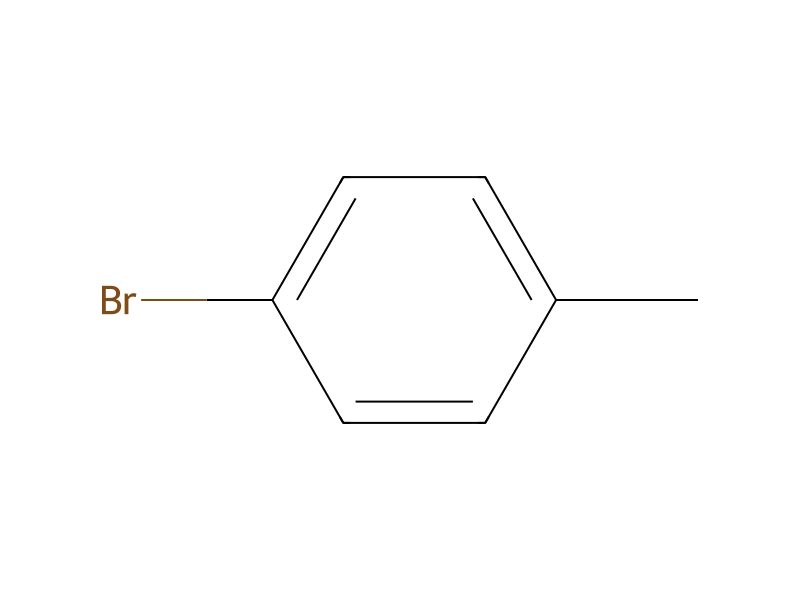
4-Bromotoluene → (1,1'-Biphenyl)-2-carboxylic acid, 4'-methyl-, methyl ester
Reaction equation

Br[C:2]1[CH:7]=[CH:6][C:5]([CH3:8])=[CH:4][CH:3]=1.Cl[C:10]1[CH:19]=[CH:18][CH:17]=[CH:16][C:11]=1[C:12]([O:14][CH3:15])=[O:13].C1(P(C2C=CC=CC=2)C2C=CC=CC=2)C=CC=CC=1>[Ni](Cl)Cl.[Zn].N1C=CC=CC=1>[CH3:8][C:5]1[CH:6]=[CH:7][C:2]([C:10]2[C:11]([C:12]([O:14][CH3:15])=[O:13])=[CH:16][CH:17]=[CH:18][CH:19]=2)=[CH:3][CH:4]=1Participants
7






Procedure
Into a 100 ml flask, 50 ml of dry pyridine, 4.28 g (0.025 mol) of 4-bromotoluene, 4.26 g (0.025 mol) of methyl 2-chlorobenzoate, 0.32 g (0.0025 mol) of anhydrous nickel chloride, 1.31 g (0.005 mol) of triphenylphosphine and 4.90 g (0.075 mol) of zinc powder were charged under a nitrogen atmosphere and stirred at room temperature for 30 minutes. The mixture was heated by an oil bath and reacted at 85° C. for 3 hours. The reaction solution was analyzed by gas chromatography. The results are shown in Table 1. The data confirming the structure are shown below.
Workup
- temperatureThe mixture was heated by an oil bath
- customreacted at 85° C. for 3 hours
Sources & evidence
- ORD record
- ord-f4a1e6d74cf4429d8189f4e706e88dc7
- Source dataset
- uspto-grants-1995_01
- Patent number
- US05380910
Reaction notes
Loading…