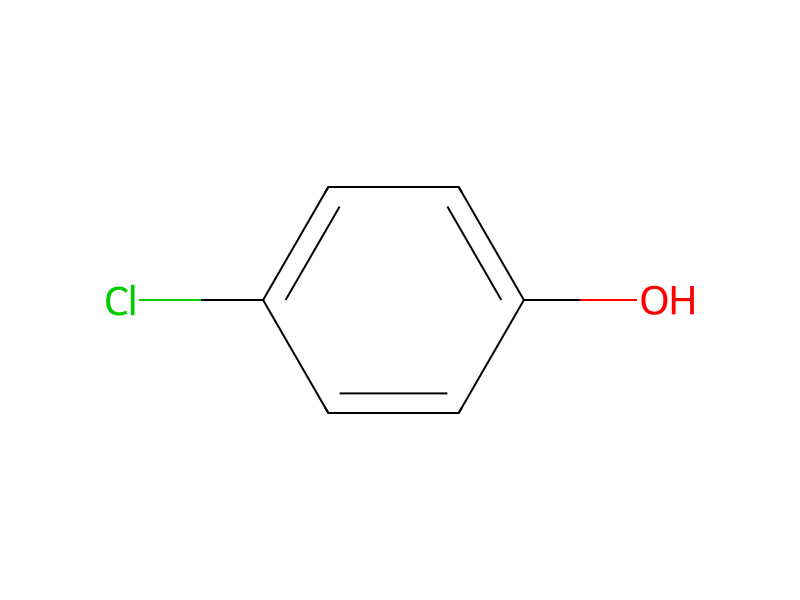
4-Chlorophenol → p-Chlorophenyl allyl ether
Reaction equation

[Cl:1][C:2]1[CH:7]=[CH:6][C:5]([OH:8])=[CH:4][CH:3]=1.C(=O)([O-])[O-].[K+].[K+].[CH2:15](Br)[CH:16]=[CH2:17]>C(#N)C>[Cl:1][C:2]1[CH:7]=[CH:6][C:5]([O:8][CH2:17][CH:16]=[CH2:15])=[CH:4][CH:3]=1Participants
5
Reactant 3


Product 1

Reagents, catalysts & solvents 1

Conditions
- Temperature
- 50 °C
Procedure
To a solution of 4-chlorophenol (30 g, 233 mmol) in acetonitrile (100 ml) was added potassium carbonate (48.1 g, 349 mmol, 1.5 eq) and allyl bromide (36.28 g, 299.9 mmol, 1.3 eq) dropwise with stirring for 5 hours at 50° C. in an oil bath. The solids were filtered out and the liquid was concentrated under vacuum to afford 1-chloro-4-(prop-2-en-1-yloxy)benzene as yellow oil (34 g, 86%); 1H NMR (300 MHz, CDCl3): δ 7.20-7.25 (m, 2H), 6.81-6.86 (m, 2H), 5.96-6.09 (m, 1H), 5.27-5.44 (m, 2H), 4.49-4.51 (m, 2H).
Workup
- filtrationThe solids were filtered out
- concentrationthe liquid was concentrated under vacuum
Sources & evidence
- ORD record
- ord-a1ecb07c22b24086b58efabbe08cdb43
- Source dataset
- uspto-grants-2016_02
- Patent number
- US09249102B2
Reaction notes
Loading…