Potassium Carbonate → HCID 178518249, compound
Reaction equation

Br[C:2]1[CH:3]=[C:4]2[C:9](=[CH:10][CH:11]=1)[N:8]=[C:7]([OH:12])[N:6]=[C:5]2[OH:13].C(=O)([O-])[O-].[K+].[K+].[F:20][C:21]1[CH:26]=[CH:25][C:24](B(O)O)=[CH:23][CH:22]=1>COCCOC.[Pd].C1(P(C2C=CC=CC=2)C2C=CC=CC=2)C=CC=CC=1.C1(P(C2C=CC=CC=2)C2C=CC=CC=2)C=CC=CC=1.C1(P(C2C=CC=CC=2)C2C=CC=CC=2)C=CC=CC=1.C1(P(C2C=CC=CC=2)C2C=CC=CC=2)C=CC=CC=1>[F:20][C:21]1[CH:26]=[CH:25][C:24]([C:2]2[CH:3]=[C:4]3[C:9](=[CH:10][CH:11]=2)[N:8]=[C:7]([OH:12])[N:6]=[C:5]3[OH:13])=[CH:23][CH:22]=1Participants
6





Conditions
- Temperature
- 170 °C
Procedure
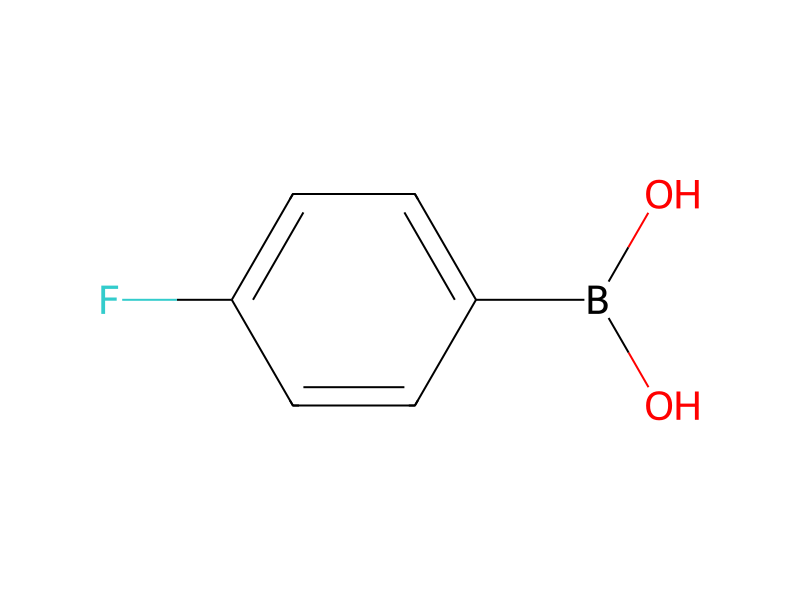
A mixture of 6-Bromo-quinazoline-2,4-diol (1 g, 4.15 mmol), potassium carbonate (11.6 ml, 0.4 M), tetrakis(triphenylphosphine) palladium (550 mg) and 4-fluorophenyl boronic acid (0.716 g, 5.1 mmol) in DME (40 ml) was heated at 170° C. for 10 minutes by microwave. Solvents were concentrated in vacuo and the residue was purified by RP HPLC with a gradient of H2O, 0.1% TFA-acetonitrile, to provide the desired product in 66% yield (760 mg).
Workup
- concentrationSolvents were concentrated in vacuo
- customthe residue was purified by RP HPLC with a gradient of H2O, 0.1% TFA-acetonitrile
Sources & evidence
- ORD record
- ord-27e6583309cb4919b3df3935161c6554
- Source dataset
- uspto-grants-2016_02
- Patent number
- US09259426B2
Reaction notes
Loading…