Triethylamine → HCID 28801055, compound
Reaction equation

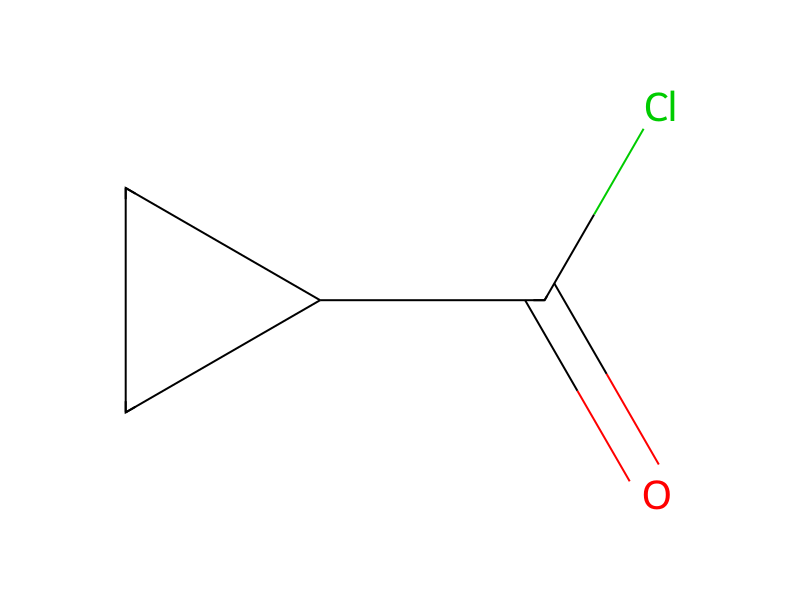
[N:1]1([C:7]2[CH:15]=[CH:14][C:10]([C:11]([OH:13])=[O:12])=[CH:9][CH:8]=2)[CH2:6][CH2:5][NH:4][CH2:3][CH2:2]1.C(N(CC)CC)C.[CH:23]1([C:26](Cl)=[O:27])[CH2:25][CH2:24]1>ClCCl>[CH:23]1([C:26]([N:4]2[CH2:3][CH2:2][N:1]([C:7]3[CH:8]=[CH:9][C:10]([C:11]([OH:13])=[O:12])=[CH:14][CH:15]=3)[CH2:6][CH2:5]2)=[O:27])[CH2:25][CH2:24]1Participants
5
Reactant 3


Product 1

Reagents, catalysts & solvents 1

Procedure
To a mixture of 4-piperazin-1-yl-benzoic acid (20 g, 71.6 mmol) and triethylamine (58 g, 573 mmol) in dichloromethane (500 mL) was added cyclopropanecarbonyl chloride dropwise at 0° C. The reaction mixture was stirred at RT overnight. The solvent was removed by rotary evaporation. The residue was diluted with water, treated with sodium hydroxide, and washed with ethyl acetate and dichloromethane. The aqueous phase was acidified to pH 6 with 5 N HCl. The resulting precipitate was collected by filtration and concentrated to dryness to provide the title compound (10 g, 51% yield) as a white solid. 1H NMR(CH3OD, 400 MHz) δ (ppm) 7.87 (m, 2H), 6.95 (m, 2H), 3.90 (s, 2H), 3.73 (s, 2H), 3.29 (m, 4H), 1.99 (m, 1H), 0.86 (m, 4H).
Workup
- customThe solvent was removed by rotary evaporation
- additionThe residue was diluted with water
- additiontreated with sodium hydroxide
- washwashed with ethyl acetate and dichloromethane
- filtrationThe resulting precipitate was collected by filtration
- concentrationconcentrated to dryness
Sources & evidence
- ORD record
- ord-1e10a0f3a18d41759bf2a7c7f1ee67b8
- Source dataset
- uspto-grants-2016_02
- Patent number
- US09260414B2
Reaction notes
Loading…