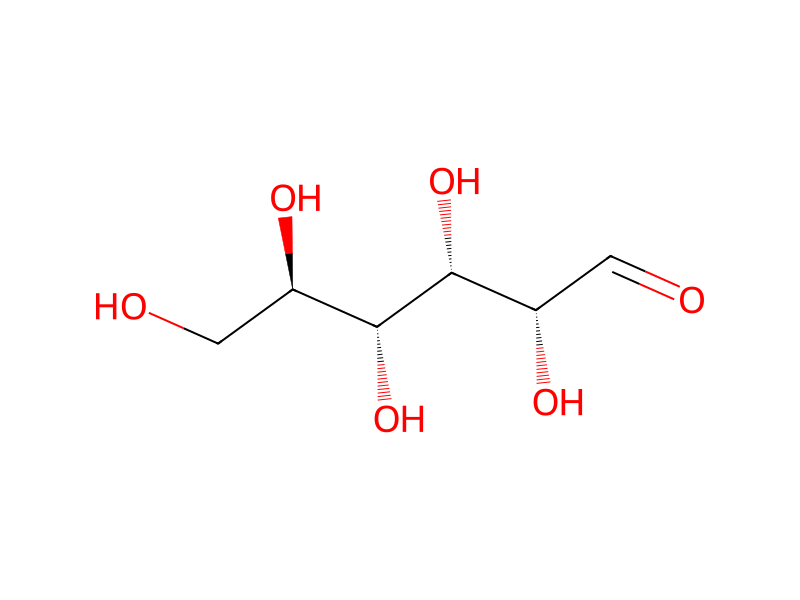
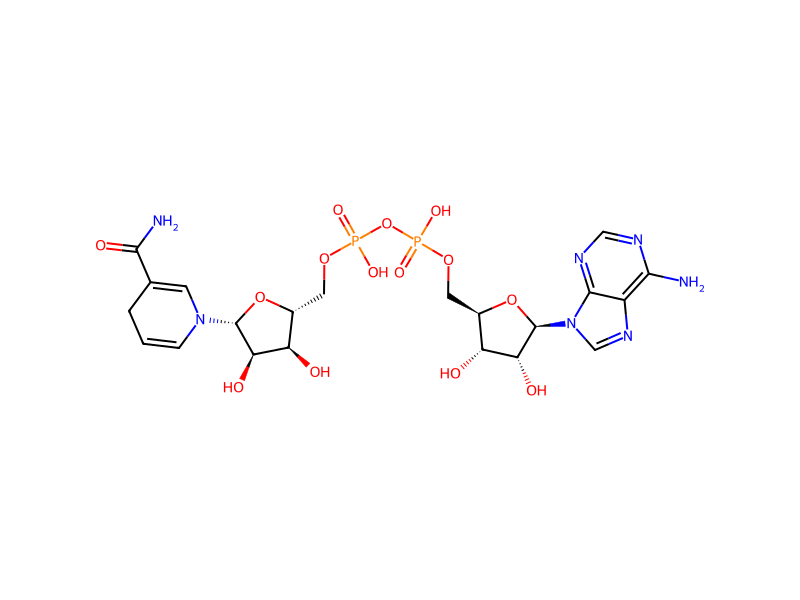
(2R,3S,4R,5R)-2,3,4,5,6-pentahydroxyhexanal → NAD Glucose
Reaction equation

[O:1]=[CH:2][C@@H:3]([C@H:5]([C@@H:7]([C@@H:9]([CH2:11][OH:12])[OH:10])[OH:8])[OH:6])[OH:4].[CH:13]1[N:14]=[C:15]([NH2:56])[C:16]2[N:21]=[CH:20][N:19]([C@@H:22]3[O:26][C@H:25]([CH2:27][O:28][P:29]([O:32][P:33]([O:36][CH2:37][C@H:38]4[O:42][C@@H:41]([N:43]5[CH:48]=[C:47]([C:49]([NH2:51])=[O:50])[CH2:46][CH:45]=[CH:44]5)[C@H:40]([OH:52])[C@@H:39]4[OH:53])([OH:35])=[O:34])([OH:31])=[O:30])[C@@H:24]([OH:54])[C@H:23]3[OH:55])[C:17]=2[N:18]=1>>[CH:13]1[N:14]=[C:15]([NH2:56])[C:16]2[N:21]=[CH:20][N:19]([C@@H:22]3[O:26][C@H:25]([CH2:27][O:28][P:29]([O:32][P:33]([O:36][CH2:37][C@H:38]4[O:42][C@@H:41]([N:43]5[CH:48]=[C:47]([C:49]([NH2:51])=[O:50])[CH2:46][CH:45]=[CH:44]5)[C@H:40]([OH:52])[C@@H:39]4[OH:53])([OH:35])=[O:34])([OH:31])=[O:30])[C@@H:24]([OH:54])[C@H:23]3[OH:55])[C:17]=2[N:18]=1.[O:1]=[CH:2][C@@H:3]([C@H:5]([C@@H:7]([C@@H:9]([CH2:11][OH:12])[OH:10])[OH:8])[OH:6])[OH:4]Participants

Conditions
- Temperature
- 90 °C
Procedure
Next, in order to evaluate thermal stability, 1 ml of a 20 mM phosphate buffer solution (pH 7.4) was added to 5 mg of the NAD-GDH-immobilizing mesoporous silica, and then the resulting mixture solution was heated at 90° C. for 30, 60, 90, or 120 minutes. After the heating, the mixture solution was centrifuged to obtain NAD-GDH-diaphorase-immobilizing silica. The obtained silica was washed twice with pure water. To this heated NAD-GDH-immobilizing silica, a 20 mM NAD solution prepared by using a 0.1 M tris-HCl buffer solution (pH 8.0) was added. After the stirring at room temperature for 5 minutes, a 1.5 M glucose solution was added to the silica solution. The resulting mixture solution was further stirred for 10 minutes. After the reaction, the solution was centrifuged at 20000 g for 10 minutes at 4° C. The activity of NAD-GDH for catalyzing a reduction reaction of NAD to NADH was measured by using the absorption maximum of NADH in the supernatant at 340 nm. For comparison, a solution of NAD-GDH that was not immobilized on mesoporous silica was prepared and similarly heated, and the activity of the NAD-GDH was measured. The relative activity of NAD-GDH was determined by using the absorbance of a solution obtained by adding 1.5 M of glucose to unheated NAD-GDH as a reference. The results confirmed the NAD-GDH immobilized on mesoporous silica retained a high relative activity even if the NAD-GDH was heated at 90° C. for 120 minutes. On the other hand, free NAD-GDH that was not immobilized on mesoporous silica was completely inactivated by heating at 90° C. for 30 minutes. The results suggest that NAD-GDH is prevented from thermal denaturation by being immobilized on pore walls of mesoporous silica.
Workup
- washThe obtained silica was washed twice with pure water
- customTo this heated NAD-GDH-immobilizing silica, a 20 mM NAD solution prepared
- additionwas added
- customAfter the reaction
- waitthe solution was centrifuged at 20000 g for 10 minutes at 4° C
- customwas prepared
- temperaturesimilarly heated
- customobtained
- temperatureby heating at 90° C. for 30 minutes
Sources & evidence
- ORD record
- ord-6917ab36ffd14285abdd58ca114ecfe4
- Source dataset
- uspto-grants-2010_06
- Patent number
- US07741069B2
Reaction notes
Loading…