4-Nitrophenol → Tert-butyl 2-(4-nitrophenoxy)acetate
Reaction equation

[N+:1]([C:4]1[CH:9]=[CH:8][C:7]([OH:10])=[CH:6][CH:5]=1)([O-:3])=[O:2].Br[CH2:12][C:13]([O:15][C:16]([CH3:19])([CH3:18])[CH3:17])=[O:14].C(=O)([O-])[O-].[K+].[K+].O1CCCC1>O>[N+:1]([C:4]1[CH:9]=[CH:8][C:7]([O:10][CH2:12][C:13]([O:15][C:16]([CH3:19])([CH3:18])[CH3:17])=[O:14])=[CH:6][CH:5]=1)([O-:3])=[O:2]Participants
Reactant 4



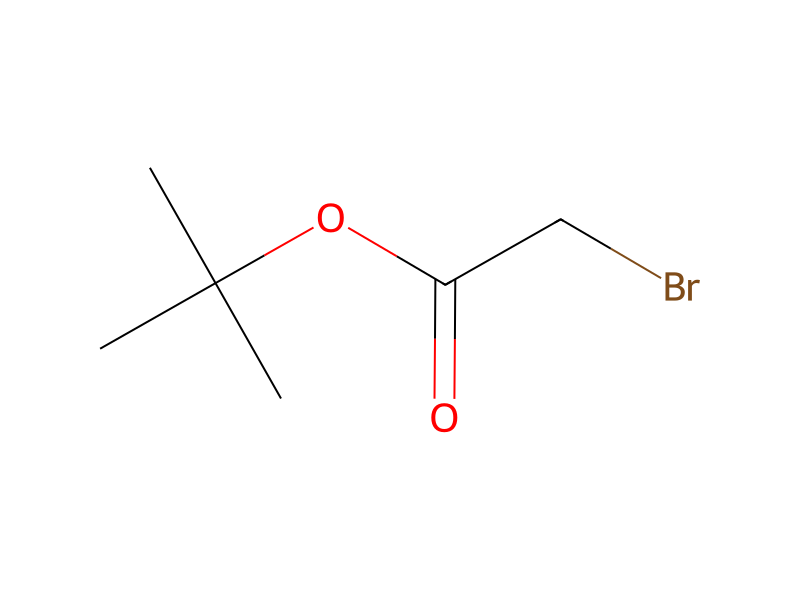
Product 1

Reagents, catalysts & solvents 1

Conditions
- Temperature
- 70 °C
Procedure
Into a 100-mL round-bottom flask purged and maintained with an inert atmosphere of nitrogen, was placed 4-nitrophenol (1 g, 7.12 mmol, 1.00 equip, 99%), tert-butyl 2-bromoacetate (1.68 g, 8.53 mmol, 1.00 equip), potassium carbonate (1.49 g, 10.60 mmol, 1.50 equip, 99%), and tetrahydrofuran (50 mL). The resulting solution was stirred for 4 h at 70° C. in an oil bath. The resulting solution was diluted with water (150 mL). The resulting solution was extracted with ethyl acetate (3×100 mL) and the organic layers combined. The resulting mixture was washed with water (1×100 mL) and brine (1×100 mL). The resulting mixture was dried over anhydrous sodium sulfate. The solids were filtered out. The filtrate was concentrated under vacuum. The residue was applied onto a silica gel column with ethyl acetate/petroleum ether (1:20) to yield tert-butyl 2-(4-nitrophenoxy)acetate as a yellow solid.
Workup
- customInto a 100-mL round-bottom flask purged
- temperaturemaintained with an inert atmosphere of nitrogen
- extractionThe resulting solution was extracted with ethyl acetate (3×100 mL)
- washThe resulting mixture was washed with water (1×100 mL) and brine (1×100 mL)
- dry with materialThe resulting mixture was dried over anhydrous sodium sulfate
- filtrationThe solids were filtered out
- concentrationThe filtrate was concentrated under vacuum
Sources & evidence
- ORD record
- ord-8db6fcc7ed1241bd93a17fb5945370f1
- Source dataset
- uspto-grants-2016_02
- Patent number
- US09266835B2
Reaction notes
Loading…