Hydrochloric Acid → HCID 90001112, compound
Reaction equation

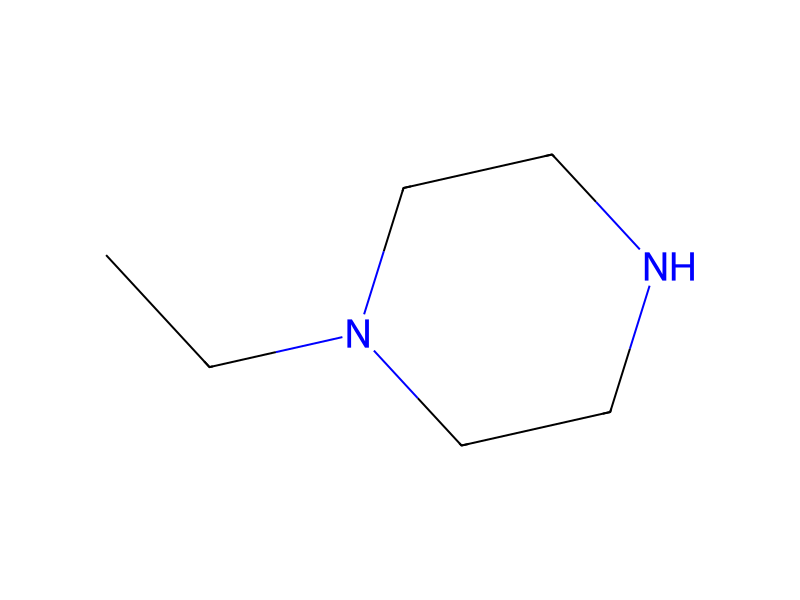
Br[C:2]([CH3:6])([CH3:5])[CH:3]=[O:4].[CH2:7]([N:9]1[CH2:14][CH2:13][NH:12][CH2:11][CH2:10]1)[CH3:8].Cl.[OH-].[K+]>C(Cl)Cl>[CH2:7]([N:9]1[CH2:14][CH2:13][N:12]([C:2]([CH3:6])([CH3:5])[CH:3]=[O:4])[CH2:11][CH2:10]1)[CH3:8]Participants
6
Reactant 4



Product 1

Reagents, catalysts & solvents 1

Procedure
To a cooled (0° C.) solution of 2-bromo-2-methyl-propanal (2504 mg, 16.58 mmol), prepared as in Example 5, in 15 mL of DCM was added 1-ethylpiperazine (2.53 mL, 19.9 mmol) and TEA (2.31 mL, 16.58 mmol) and the solution stirred at rt for 24 hours. The mixture was worked up with 1N HCl (50 mL) and DCM (50 mL×2). The aqueous was basified with KOH to pH 11 and washed with DCM (50 mL×3). The organic layers were washed with saturated sodium chloride, dried (MgSO4), and then concentrated to obtain 2-(4-ethylpiperazin-1-yl)-2-methyl-propanal (90% yield) as an oil.
Workup
- temperatureTo a cooled
- washwashed with DCM (50 mL×3)
- washThe organic layers were washed with saturated sodium chloride
- dry with materialdried (MgSO4)
- concentrationconcentrated
Sources & evidence
- ORD record
- ord-de33780afa1b4957a558ab1410158389
- Source dataset
- uspto-grants-2016_02
- Patent number
- US09266895B2
Reaction notes
Loading…