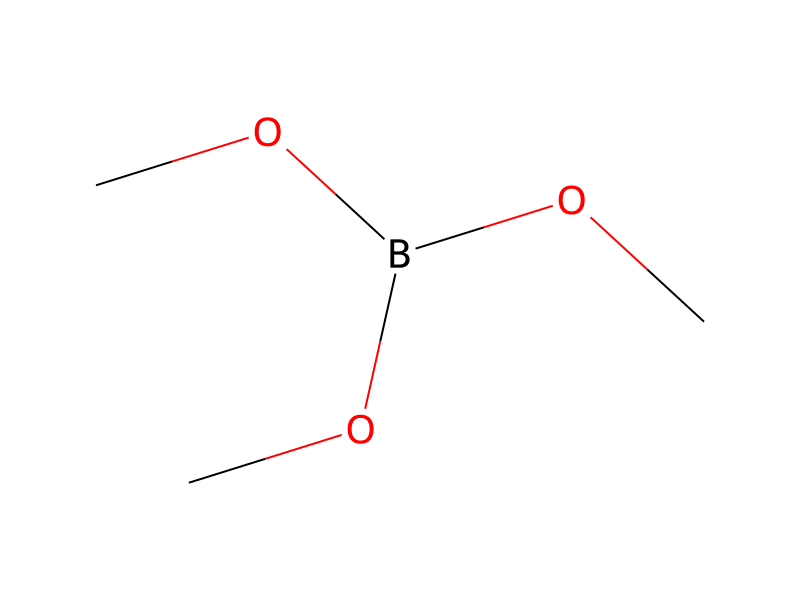
Trimethyl borate → 3-Pyridinylboronic acid
Reaction equation

Br[C:2]1[CH:3]=[N:4][CH:5]=[CH:6][CH:7]=1.C[O:9][B:10](OC)[O:11]C.C([Li])(C)(C)C>C(OCC)C.CCCCC>[N:4]1[CH:5]=[CH:6][CH:7]=[C:2]([B:10]([OH:11])[OH:9])[CH:3]=1Participants
Reactant 3
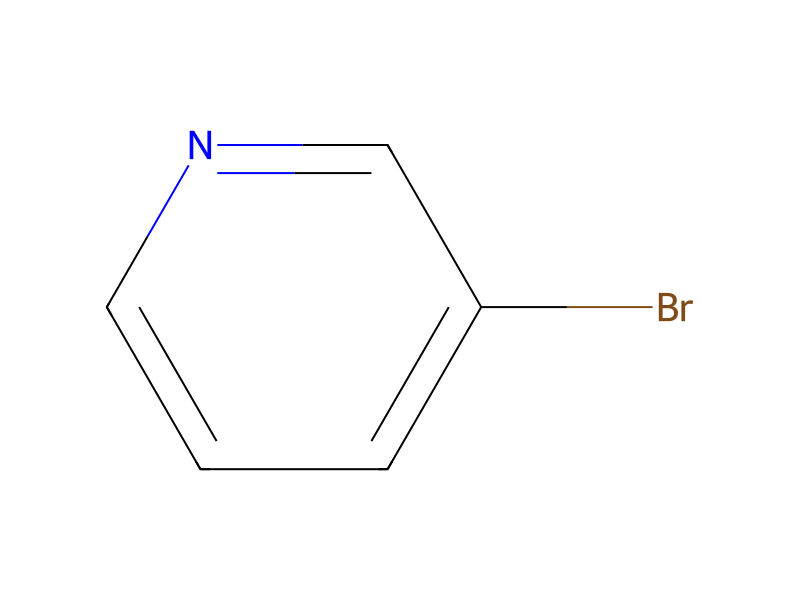

Product 1

Reagents, catalysts & solvents 2


Procedure
A solution of 4.0 ml (6.56 g, 42 mmol) of 3-bromopyridine and 9 ml (8 mmol) of trimethylborate in 100 ml of diethyl ether was cooled to -70° C. then treated slowly with 33 ml (83.8 mmol) of a 2.54M tert-butyllithium in pentane solution. After allowing the resulting slurry to warm to room temperature the solvents were evaporated under vacuum. The residual oil was treated carefully with 50 ml of a 1M hydrochloric acid solution. Several milliters of methylene chloride were added and the mixture was stirred until the oil had dissolved. The aqueous layer was washed with fresh methylene chloride. The pH of the aqueous solution was raised to 12 with 5M sodium hydroxide solution and the washing was repeated. The pH of the aqueous solution was then lowered to 6.5 with concentrated hydrochloric acid solution. After chilling, this solution was filtered, saturated with sodium chloride, then extracted several times with a 2:1 mixture of diethyl ether and isopropanol. Evaporation of these extracts produced a colorless solid. This material was further purified by dissolving in methanol, evaporating to a thick paste, adding a few milliters of water, concentrating further under vacuum, then chilling and collecting the crystalline product. Additional product in the aqueous mother liquor was isolated by repeating this process. Thorough drying of this hydrated product at 0.1 mm pressure afforded a fine powder weighing 2.2 g. Elemental analysis and a mass spectrum indicated the product so isolated was primarily the anhydride (tripyridylboroxane).
Workup
- customwere evaporated under vacuum
- additionThe residual oil was treated carefully with 50 ml of a 1M hydrochloric acid solution
- additionSeveral milliters of methylene chloride were added
- dissolutionhad dissolved
- washThe aqueous layer was washed with fresh methylene chloride
- temperatureThe pH of the aqueous solution was raised to 12 with 5M sodium hydroxide solution
- temperatureAfter chilling
- filtrationthis solution was filtered, saturated with sodium chloride
- extractionextracted several times
- additionwith a 2:1 mixture of diethyl ether and isopropanol
- customEvaporation of these extracts
- customproduced a colorless solid
- customThis material was further purified
- dissolutionby dissolving in methanol
- customevaporating to a thick paste
- additionadding a few milliters of water
- concentrationconcentrating further under vacuum
- temperaturechilling
- customcollecting the crystalline product
- customAdditional product in the aqueous mother liquor was isolated
- customThorough drying of this hydrated product at 0.1 mm pressure
- customafforded a fine powder
- customso isolated
Sources & evidence
- ORD record
- ord-ed13c97cbeb948bda6aee994a95925f6
- Source dataset
- uspto-grants-1997_05
- Patent number
- US05633273
Reaction notes
Loading…