Dimethylformamide → HCID 46882503, compound
Reaction equation

FC(S(O[C:9]1[C:26]([O:27][CH3:28])=[CH:25][C:24]2[C@@H:23]3[C@H:14]([C@H:15]4[C@@:19]([CH2:21][CH2:22]3)([CH3:20])[C:18](=[O:29])[CH2:17][CH2:16]4)[CH2:13][CH2:12][C:11]=2[CH:10]=1)(=O)=O)(F)F.C1(P(C2C=CC=CC=2)CCCP(C2C=CC=CC=2)C2C=CC=CC=2)C=CC=CC=1.C[Si](C)(C)N[Si](C)(C)C.C[N:69](C)[CH:70]=[O:71]>[Pd](Cl)Cl>[CH3:28][O:27][C:26]1[C:9]([C:70]([NH2:69])=[O:71])=[CH:10][C:11]2[CH2:12][CH2:13][C@@H:14]3[C@@H:23]([C:24]=2[CH:25]=1)[CH2:22][CH2:21][C@@:19]1([CH3:20])[C@H:15]3[CH2:16][CH2:17][C:18]1=[O:29]Participants



Conditions
- Temperature
- 110 °C
Procedure
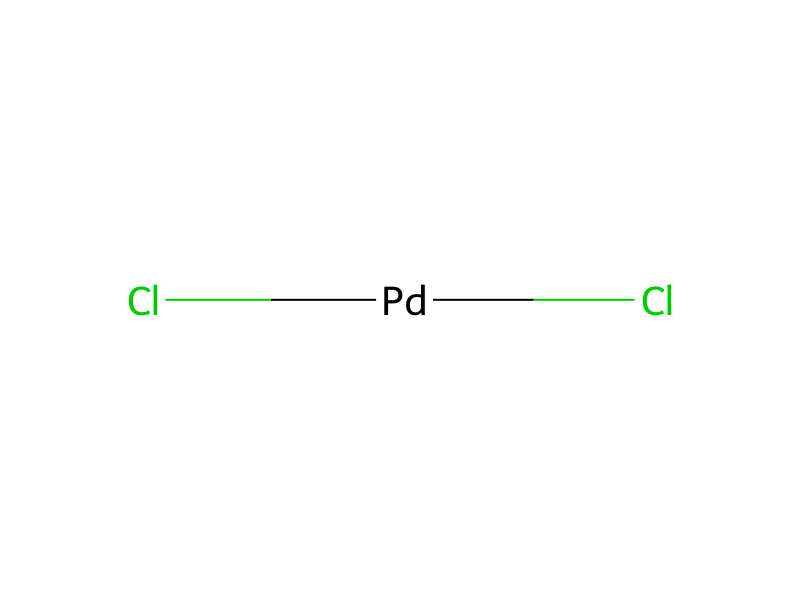
A 1-L 3 neck round-bottomed flask equipped with an overhead stirrer, reflux condenser, nitrogen inlet and thermocouple, was charged with 2-methoxy-17-oxoestra-1,3,5(10)-triene-3-yl(trifluoromethyl)sulfonate (Scheme 5, Compound 42) (15 g, 34.7 mmol), 1,3-bis(diphenylphosphino)propane (1.54 g, 3.73 mmol), palladium (II) chloride (0.33 g, 1.9 mmol), 1,1,1,3,3,3-hexamethyldisilazane (31 mL, 150 mmol) and anhydrous dimethylformamide (110 mL). Carbon monoxide was bubbled through the yellow solution while stirring for 5 minutes. The reaction was heated to 110° C. under an atmosphere of carbon monoxide (balloon) and allowed to stir for 15 h. During this period the reaction became dark. The reaction was quenched by treating with methanol (25 mL) and stirred for 10 min. The mixture was poured into ethyl acetate (1 L) and washed with 2N sulfuric acid (750 mL). The aqueous layer was extracted with ethyl acetate (2×500 mL) and the combined organic phases were washed with 2N sulfuric acid (250 mL) and saturated aqueous sodium bicarbonate (500 mL) then dried over 500 g of sodium sulfate. This mixture was suction-filtered through a bed of silica gel 60 (67 g) and concentrated to dryness affording crude product (11.2 g, 98% recovery). The crude material was purified by Flash column chromatography (360 g of silica gel 60, eluting with methylene chloride, then 1:5 ethyl acetate:methylene chloride). Concentration of the pure fractions (Rf=0.3, 1:5 ethyl acetete:methylene chloride, UV detection) and drying in a vacuum oven at 50° C., and removal of residual solvents afforded pure product (Scheme 5, Compound 54) (4.97 g, 44% yield) as an off-white to pale yellow solid. 1H NMR (300 MHz, CDCl3) δ 7.99 (s, 1H), 7.82 (br s, 1H), 7.05 (s, 1H), 5.92 (br s, 1H), 4.02 (s, 3H), 3.05 (dd, 2H, J=5), 2.15 (m 2H,) 2.02-1.65 (m, 6H), 1.55-1.15 (m, 8H), 0.80 (s, 3H). 13C NMR (125 MHz, CDCl3) δ 220.6, 167.2, 155.9, 145.5, 132.8, 129.4, 118.3, 108.4, 55.9, 50.5, 47.9, 44.9, 37.8, 35.8, 31.6, 28.26, 26.4, 25.8, 21.6, 13.8.
Workup
- temperaturereflux condenser, nitrogen inlet
- customCarbon monoxide was bubbled through the yellow solution
- stirringto stir for 15 h
- waitDuring this period the reaction became dark
- customThe reaction was quenched
- additionby treating with methanol (25 mL)
- stirringstirred for 10 min
- additionThe mixture was poured into ethyl acetate (1 L)
- washwashed with 2N sulfuric acid (750 mL)
- extractionThe aqueous layer was extracted with ethyl acetate (2×500 mL)
- washthe combined organic phases were washed with 2N sulfuric acid (250 mL) and saturated aqueous sodium bicarbonate (500 mL)
- dry with materialthen dried over 500 g of sodium sulfate
- filtrationThis mixture was suction-filtered through a bed of silica gel 60 (67 g)
- concentrationconcentrated to dryness
- customaffording crude product (11.2 g, 98% recovery)
- customThe crude material was purified by Flash column chromatography (360 g of silica gel 60
- washeluting with methylene chloride
- dry with materialConcentration of the pure fractions (Rf=0.3, 1:5 ethyl acetete:methylene chloride, UV detection) and drying in a vacuum oven at 50° C.
- customremoval of residual solvents
Sources & evidence
- ORD record
- ord-da81b91a196a42238b3e7f89d253e55f
- Source dataset
- uspto-grants-2009_03
- Patent number
- US07498322B2
Reaction notes
Loading…