Potassium Carbonate → 1-Isopropyl-4-(5-nitro-pyridin-2-yl)-piperazine
Reaction equation

Cl[C:2]1[CH:7]=[CH:6][C:5]([N+:8]([O-:10])=[O:9])=[CH:4][N:3]=1.[CH:11]([N:14]1[CH2:19][CH2:18][NH:17][CH2:16][CH2:15]1)([CH3:13])[CH3:12].C([O-])([O-])=O.[K+].[K+]>C1COCC1>[CH:11]([N:14]1[CH2:19][CH2:18][N:17]([C:2]2[CH:7]=[CH:6][C:5]([N+:8]([O-:10])=[O:9])=[CH:4][N:3]=2)[CH2:16][CH2:15]1)([CH3:13])[CH3:12]Participants
5
Reactant 3

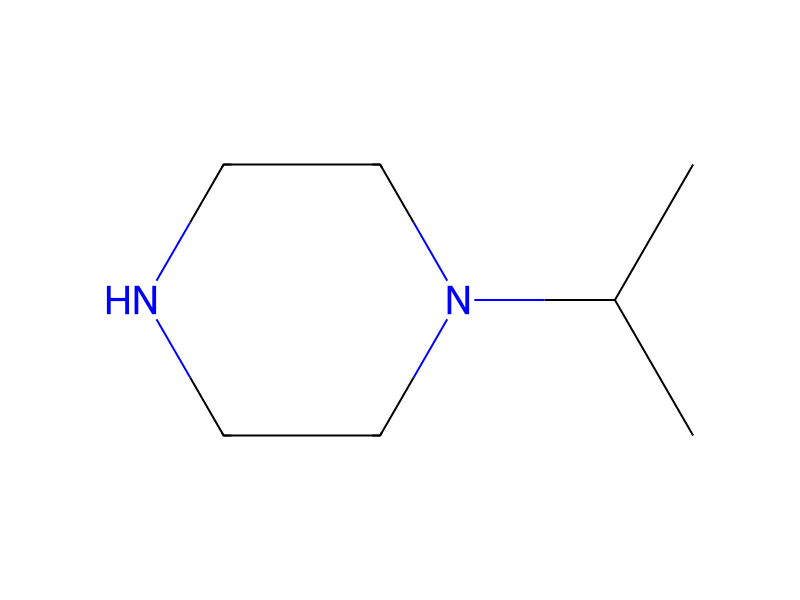

Product 1

Reagents, catalysts & solvents 1

Conditions
- Temperature
- 50 °C
Procedure
To a solution of 2-chloro-5-nitropyridine (2.5 g, 15.7 mmol) in THF (25 mL), are added 1-isopropylpiperazine (2.01 g, 15.7 mmol) and K2CO3 (3.25 g, 23.6 mmol). The reaction mixture is stirred at 50° C. for 4 hours and then at 70° C. overnight. The solvent is removed in vacuo and the resultant orange solid is triturated using 10:1 petroleum ether-diethyl ether. The isolated compound (3.7 g, 94%) is used in the next step without further purification.
Workup
- customat 70° C.
- customovernight
- customThe solvent is removed in vacuo
- customthe resultant orange solid is triturated
- customThe isolated compound (3.7 g, 94%) is used in the next step without further purification
Sources & evidence
- ORD record
- ord-5b08441a8fae42b5aa4c28a3eb8bc8dc
- Source dataset
- uspto-grants-2009_03
- Patent number
- US07501411B2
Reaction notes
Loading…