Potassium Carbonate → 7-chloro-4-cyclopropylmethyl-4H-1,2,4-benzothiadiazine 1,1-dioxide
Reaction equation
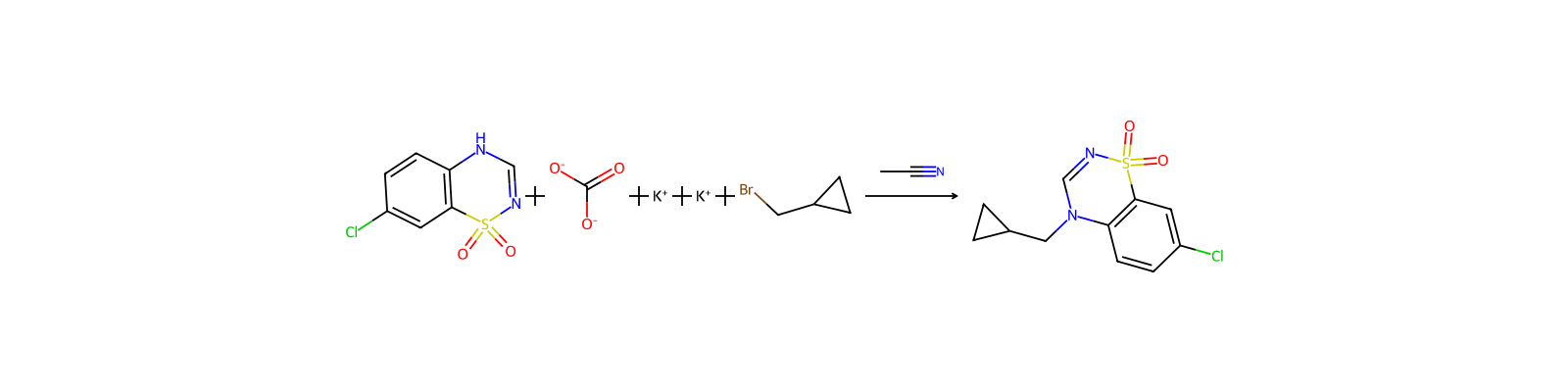
[Cl:1][C:2]1[CH:13]=[CH:12][C:5]2[NH:6][CH:7]=[N:8][S:9](=[O:11])(=[O:10])[C:4]=2[CH:3]=1.C(=O)([O-])[O-].[K+].[K+].[CH:20]1([CH2:23]Br)[CH2:22][CH2:21]1>C(#N)C>[Cl:1][C:2]1[CH:13]=[CH:12][C:5]2[N:6]([CH2:23][CH:20]3[CH2:22][CH2:21]3)[CH:7]=[N:8][S:9](=[O:11])(=[O:10])[C:4]=2[CH:3]=1Participants
5




Procedure
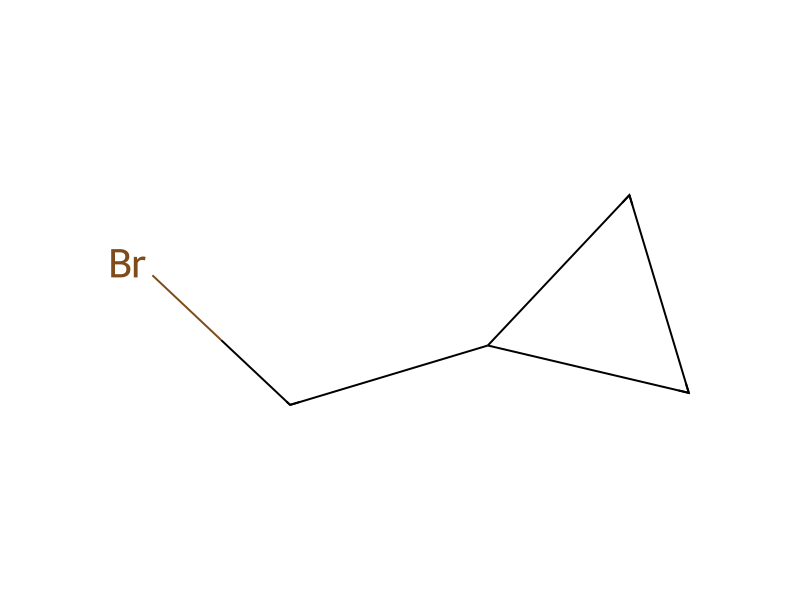
To a solution of 7-chloro-4H-1,2,4-benzothiadiazine 1,1-dioxide (1 g) in acetonitrile (40 mL) there is added potassium carbonate (2.5 g) and cyclopropylmethyl bromide (0.7 mL) and the mixture is heated at reflux for 24 hours. The reaction mixture is evaporated under reduced pressure and the residue is taken up in water (40 mL). The insoluble material is collected by filtration, washed with water and dried and is recrystallised from methanol.
Workup
- temperaturethe mixture is heated
- temperatureat reflux for 24 hours
- customThe reaction mixture is evaporated under reduced pressure
- filtrationThe insoluble material is collected by filtration
- washwashed with water
- customdried
- customis recrystallised from methanol
Sources & evidence
- ORD record
- ord-d07ab9fef9904ab38a6dd0d86162755a
- Source dataset
- uspto-grants-2010_06
- Patent number
- US07741320B2
Reaction notes
Loading…