3-Pyridinecarboxaldehyde → HCID 22036171, compound
Reaction equation

[CH3:1][S:2][C:3]1[CH:9]=[CH:8][C:6]([NH2:7])=[CH:5][CH:4]=1.[N:10]1[CH:15]=[CH:14][CH:13]=[C:12](C=O)[CH:11]=1.[C:18](O[BH-](OC(=O)C)OC(=O)C)(=O)C.[Na+]>ClCCl>[N:10]1[CH:11]=[CH:12][CH:13]=[CH:14][C:15]=1[CH2:18][NH:7][C:6]1[CH:8]=[CH:9][C:3]([S:2][CH3:1])=[CH:4][CH:5]=1Participants
5
Reactant 3
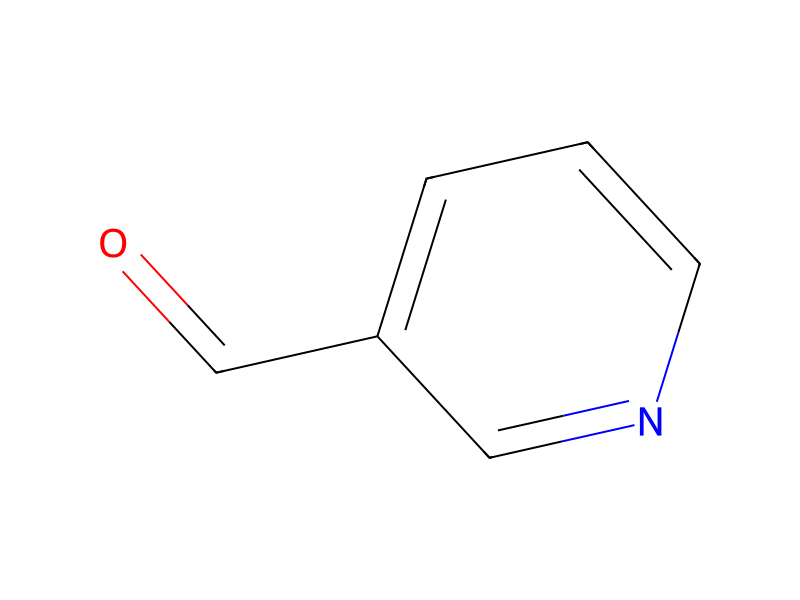


Product 1

Reagents, catalysts & solvents 1

Procedure
To 2.0 mL (16.07 mmol) of 4-(methylthio)aniline dissolved in 25 mL dichloromethane was added 1.52 mL (16.07 mmol) 3-pyridinecarboxaldehyde, followed by 5.11 g (24.11 mmol) sodium triacetoxyborohydride. The mixture was stirred at room temperature for 4 h, partitioned between EtOAc and brine, dried over MgSO4 and concentrated. Column chromatography, eluting with ethyl acetate/hexane, provided 3.70 g of 4-[(pyridin-2-ylmethyl)amino]thioanisole, pure by 1H NMR.
Workup
- custompartitioned between EtOAc and brine
- dry with materialdried over MgSO4
- concentrationconcentrated
- washColumn chromatography, eluting with ethyl acetate/hexane
Sources & evidence
- ORD record
- ord-9a4faf2fd423406690350473b80690da
- Source dataset
- uspto-grants-2006_07
- Patent number
- US07071177B2
Reaction notes
Loading…