Bromide ion → HCID 21942497, compound
Reaction equation

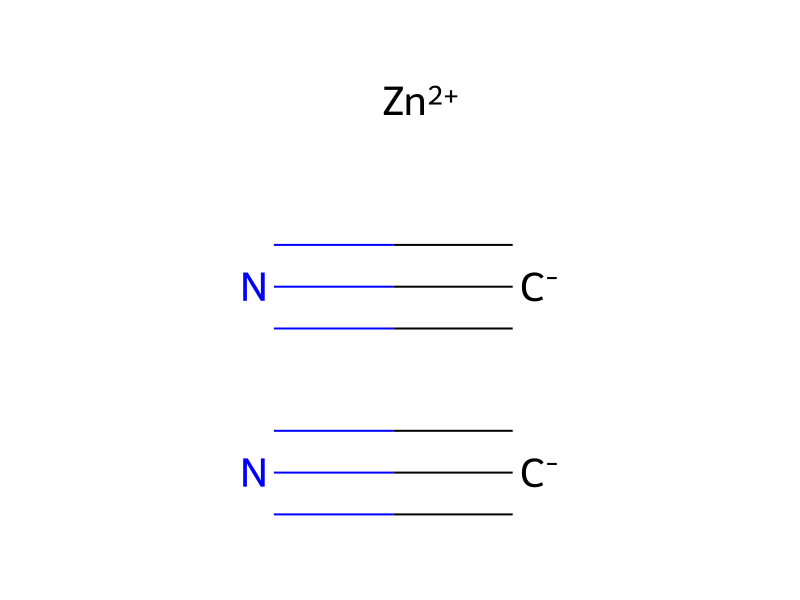
[F:1][C:2]1[CH:3]=[C:4]([N:9]2[CH:13]=[CH:12][N:11]=[CH:10]2)[CH:5]=[C:6](Br)[CH:7]=1.[Br-].[CH3:15][N:16](C=O)C>[C-]#N.[Zn+2].[C-]#N.C1C=CC([P]([Pd]([P](C2C=CC=CC=2)(C2C=CC=CC=2)C2C=CC=CC=2)([P](C2C=CC=CC=2)(C2C=CC=CC=2)C2C=CC=CC=2)[P](C2C=CC=CC=2)(C2C=CC=CC=2)C2C=CC=CC=2)(C2C=CC=CC=2)C2C=CC=CC=2)=CC=1>[F:1][C:2]1[CH:3]=[C:4]([N:9]2[CH:13]=[CH:12][N:11]=[CH:10]2)[CH:5]=[C:6]([C:15]#[N:16])[CH:7]=1Participants
6
Reactant 3



Product 1

Reagents, catalysts & solvents 2

Conditions
- Temperature
- 80 °C
Procedure
A solution of 3-fluoro-5-bromo-(1H-imidazol-1-yl)-benzene in DMF (36 mL) was treated with zinc cyanide and tetrakis(triphenylphosphine)palladium(0). The reaction mixture was heated under an argon atmosphere for 18 h at 80° C. when GC-MS indicated complete disappearance of starting bromide and presence of product molecular ion (M+ 187). The reaction mixture was partitioned between ethyl acetate and water, filtered to remove insoluble material, and the layers obtained in the filtrate were separated. The organic layer was washed with brine, dried over magnesium sulfate and concentrated in vacuo. 3-Fluoro-5-cyano-(1H-imidazol-1-yl)-benzene was obtained as a colourless solid and used without further purification.
Workup
- customThe reaction mixture was partitioned between ethyl acetate and water
- filtrationfiltered
- customto remove insoluble material
- customthe layers obtained in the filtrate
- customwere separated
- washThe organic layer was washed with brine
- dry with materialdried over magnesium sulfate
- concentrationconcentrated in vacuo
Sources & evidence
- ORD record
- ord-5b79f67932a94e14accfc8c088e94cde
- Source dataset
- uspto-grants-2006_07
- Patent number
- US07074809B2
Reaction notes
Loading…