Sulfuric Acid → 1,3-Adamantanedicarboxylic acid
Reaction equation

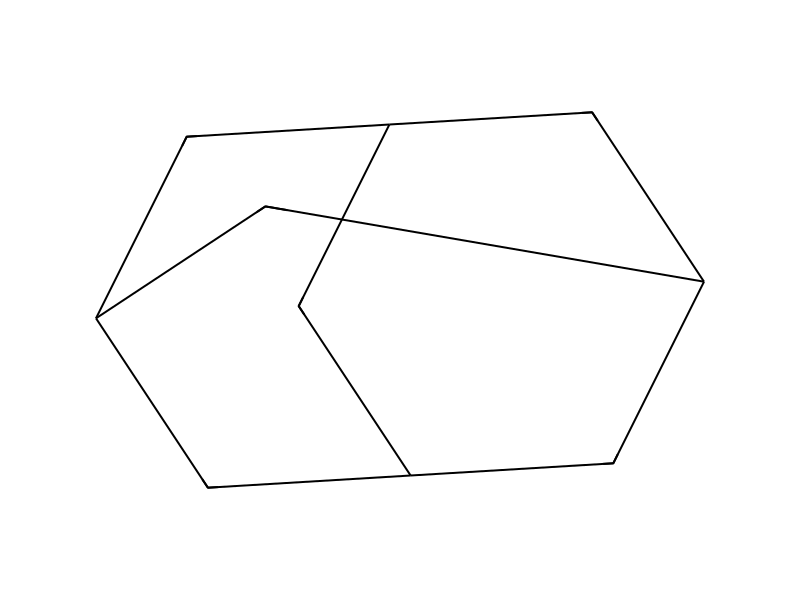
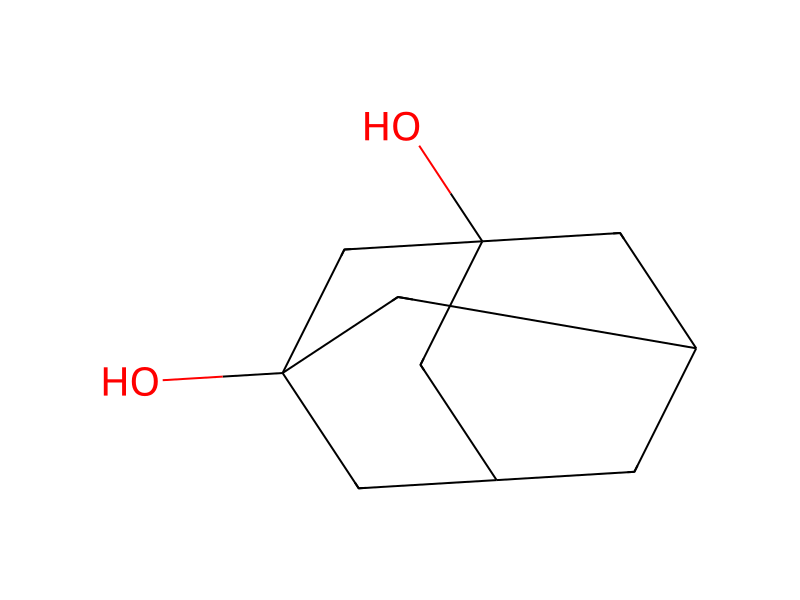
[C:1]([O:6]C(C12CC3CC(CC(C(OC(=O)C(C)=C)(C)C)(C3)C1)C2)(C)C)(=[O:5])C(C)=C.[CH:29]12[CH2:38][CH:33]3[CH2:34][CH:35]([CH2:37][CH:31]([CH2:32]3)[CH2:30]1)[CH2:36]2.[OH:39][C:40]12[CH2:49][CH:44]3[CH2:45][CH:46]([CH2:48][C:42]([OH:50])([CH2:43]3)[CH2:41]1)[CH2:47]2.S(=O)(=O)(O)[OH:52]>C(O)=O.ClCCCl>[OH:39][C:40]12[CH2:49][CH:44]3[CH2:45][CH:46]([CH2:48][C:42]([OH:50])([CH2:43]3)[CH2:41]1)[CH2:47]2.[C:29]12([C:42]([OH:50])=[O:52])[CH2:38][CH:33]3[CH2:34][CH:35]([CH2:37][C:31]([C:1]([OH:6])=[O:5])([CH2:32]3)[CH2:30]1)[CH2:36]2Participants





Procedure
The synthesis of 2-methacryloyloxy-2-(3-(2-methacryloyloxy-2-propyl)-1-adamantyl)propane was performed by the following method. First, according to the method described in Japanese Patent Application Laid-open No. 2002-167342, 100 g of 1,3-dihydroxyadamantane was synthesized from adamantane. Next, a four-necked flask equipped with a stirrer, a thermometer, a dropping funnel and a Dimroth condenser was charged with 100 g of 1,3-dihydroxyadamantane, 500 mL of 1,2-dichloroethane and 800 g of 96% sulfuric acid, and further 300 g of formic acid was dropped into the flask for 1 h. Thereafter, the contents of the flask were reacted at 25° C. for 10 h. The resultant reaction solution was filtered to separate precipitated crystals therefrom. The thus separated crystals were washed with water to obtain 140 g of 1,3-adamantanedicarboxylic acid.
Workup
- customNext, a four-necked flask equipped with a stirrer
- additionwas dropped into the flask for 1 h
- customThereafter, the contents of the flask were reacted at 25° C. for 10 h
- customThe resultant reaction solution
- filtrationwas filtered
- customto separate
- customprecipitated crystals
- washThe thus separated crystals were washed with water
Sources & evidence
- ORD record
- ord-946f03b2dca0420599ed66931098e182
- Source dataset
- uspto-grants-2006_07
- Patent number
- US07078562B2
Reaction notes
Loading…