Hydrochloric Acid → HCID 178526420, compound
Reaction equation

[OH:1][C:2]1[C:11]([OH:12])=[N:10][C:9]2[C:4](=[CH:5][CH:6]=[C:7]([C:13]([F:16])([F:15])[F:14])[CH:8]=2)[N:3]=1.[N+:17]([O-])([O-:19])=[O:18].[K+].Cl>OS(O)(=O)=O.[OH-].[Na+]>[OH:12][C:11]1[C:2]([OH:1])=[N:3][C:4]2[C:9](=[CH:8][C:7]([C:13]([F:16])([F:14])[F:15])=[C:6]([N+:17]([O-:19])=[O:18])[CH:5]=2)[N:10]=1Participants
6
Reactant 3

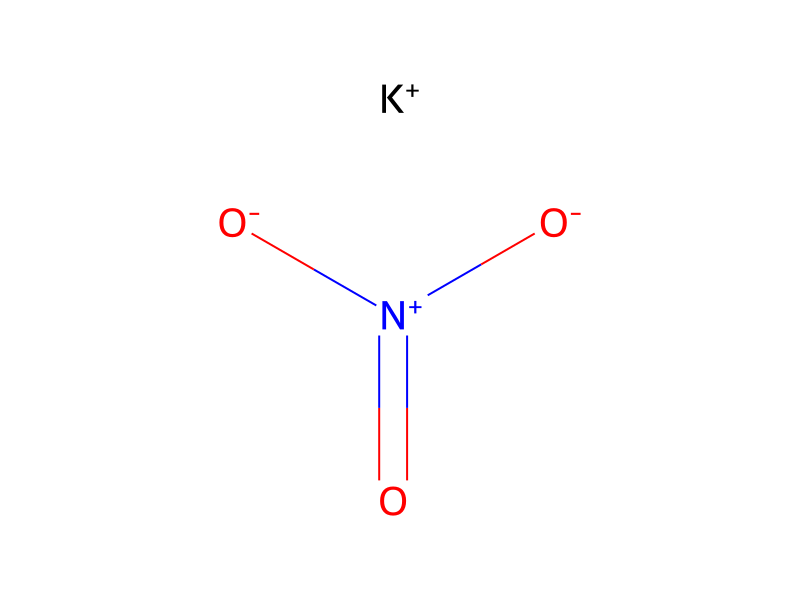

Product 1

Reagents, catalysts & solvents 2


Conditions
- Temperature
- 24 °C
Procedure
A solution of 1 g (4.4 mmol) 2,3-dihydroxy-6-trifluoromethylquinoxaline in 10 ml concentrated H2SO4 is cooled to 0° C. and 438 mg (4.4 mmol) KNO3 is added. The mixture is stirred at 0° C. for 0.5 h and at 24° C. for 3 h. The reaction mixture is poured into ice-water to give 1.02 g crude product. The crude product is dissolved in 2N NaOH. Addition of 4N HCl to pH 5 gives 0.86 g (72%) 2,3-dihydroxy-6-nitro-7-trifluoromethylquinoxaline. NMR: two singlets (7.5 and 7.8 ppm downfield from TMS).
Workup
- customto give 1.02 g crude product
Sources & evidence
- ORD record
- ord-13df26d266a64ad88e30ef4d4128c856
- Source dataset
- uspto-grants-2006_07
- Patent number
- US07081346B2
Reaction notes
Loading…