Ethyl Acetate → 4-(4-Nitrophenyl)thiomorpholine
Reaction equation

F[C:2]1[CH:7]=[CH:6][C:5]([N+:8]([O-:10])=[O:9])=[CH:4][CH:3]=1.[NH:11]1[CH2:16][CH2:15][S:14][CH2:13][CH2:12]1.C(OCC)(=O)C.C(=O)(O)[O-].[Na+]>C1(C)C=CC=CC=1>[N+:8]([C:5]1[CH:6]=[CH:7][C:2]([N:11]2[CH2:16][CH2:15][S:14][CH2:13][CH2:12]2)=[CH:3][CH:4]=1)([O-:10])=[O:9]Participants
6
Reactant 4

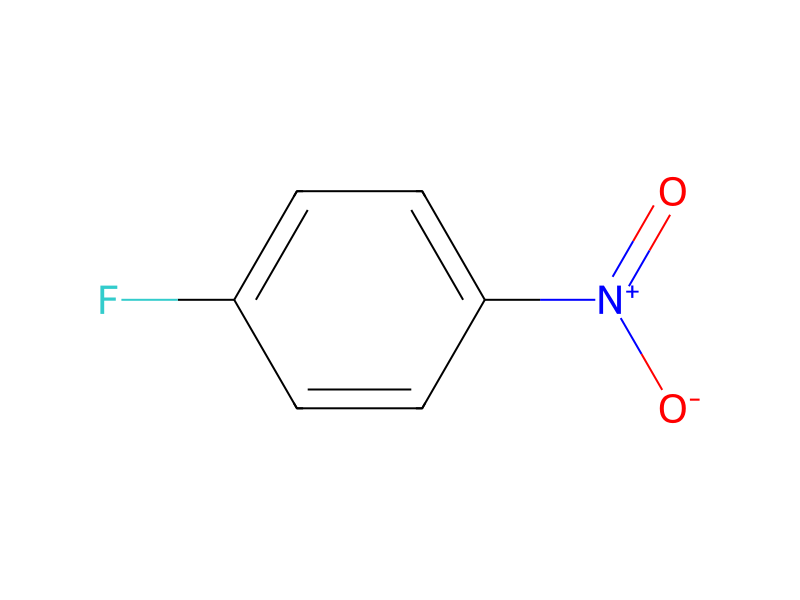


Product 1

Reagents, catalysts & solvents 1

Conditions
- Temperature
- 100 °C
Procedure
4-Fluoronitrobenzene (3.0 g, 21.3 mmol) was dissolved in toluene (25 mL). Thiomorpholine (2.4 mL, 23.4 mmol) was added and the mixture stirred overnight at 100° C. At 17 h, the mixture was distributed between ethyl acetate (100 mL) and saturated sodium bicarbonate (50 mL). The organic layer was separated, dried (Na2SO4), filtered and concentrated under vacuum. The residue was triturated with hexane to yield a bright yellow solid.
Workup
- waitAt 17 h
- customThe organic layer was separated
- dry with materialdried (Na2SO4)
- filtrationfiltered
- concentrationconcentrated under vacuum
- customThe residue was triturated with hexane
- customto yield a bright yellow solid
Sources & evidence
- ORD record
- ord-0d88359cc96a486d8e2d4611218f7d3f
- Source dataset
- uspto-grants-2006_04
- Patent number
- US07026314B2
Reaction notes
Loading…