Trimethyl phosphite → Dimethyl (Phthalimidomethyl)Phosphonate
Reaction equation

Br[CH2:2][N:3]1[C:7](=[O:8])[C:6]2=[CH:9][CH:10]=[CH:11][CH:12]=[C:5]2[C:4]1=[O:13].[P:14]([O:19]C)([O:17][CH3:18])[O:15][CH3:16]>C1(C)C(C)=CC=CC=1>[C:7]1(=[O:8])[N:3]([CH2:2][P:14](=[O:19])([O:17][CH3:18])[O:15][CH3:16])[C:4](=[O:13])[C:5]2=[CH:12][CH:11]=[CH:10][CH:9]=[C:6]12Participants
4
Reactant 2
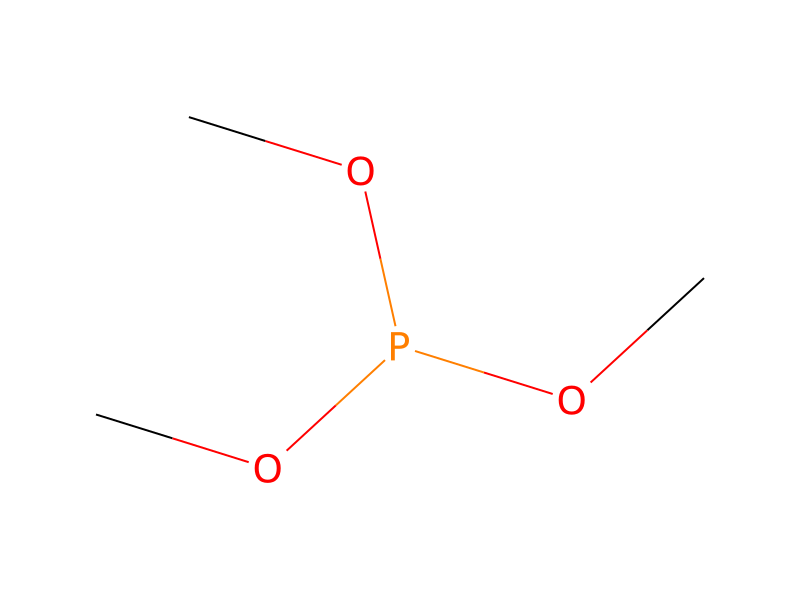

Product 1

Reagents, catalysts & solvents 1

Procedure
A mixture of N-(bromomethyl) phthalimide (i) (10.43 g, 43.46 mmol) and trimethyl phosphite (5.93 g, 47.80 mmol) was heated at reflux in xylene (20 mL) for 6 h. The reaction mixture was then cooled to room temperature and concentrated. Crystallization from CHCl3-hexane gave (ii) (7.60 g, 65%) as a white solid: 1H NMR (300 MHz, CDCl3) δH 3.84 (d, JH,P=10.8 Hz, 6 H), 4.12 (d, J=11.4 Hz, 2 H), 7.76 (m, 2 H), 7.87 (m, 2 H).
Workup
- temperaturewas heated
- concentrationconcentrated
- customCrystallization from CHCl3-hexane
Sources & evidence
- ORD record
- ord-984c6f2285c646758a4e24a205a7edb6
- Source dataset
- uspto-grants-2006_04
- Patent number
- US07030103B2
Reaction notes
Loading…