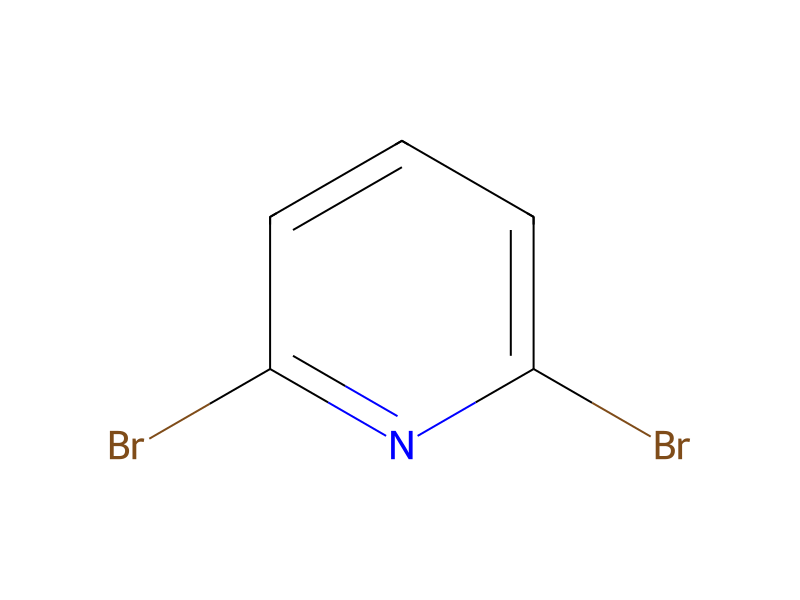
2,6-Dibromopyridine → HCID 9945633, compound
Reaction equation

Br[C:2]1[CH:7]=[CH:6][CH:5]=[C:4]([Br:8])[N:3]=1.[F:9][C:10]([C:13]1[CH:18]=[CH:17][N:16]2[C:19]([Sn](CCCC)(CCCC)CCCC)=[CH:20][N:21]=[C:15]2[N:14]=1)([CH3:12])[CH3:11]>>[Br:8][C:4]1[N:3]=[C:2]([C:19]2[N:16]3[CH:17]=[CH:18][C:13]([C:10]([F:9])([CH3:11])[CH3:12])=[N:14][C:15]3=[N:21][CH:20]=2)[CH:7]=[CH:6][CH:5]=1Participants
3


Procedure
2,6-Dibromopyridine was coupled with 7-(1-fluoro-1-methylethyl)-3-tributylstannylimidazo[1,2-α]pyrimidine by the method of Example 1 to afford 3-(6-bromopyridin-2-yl)-7-(1-fluoro-1-methylethyl)imidazo[1,2-α]pyrimidine (1.0 g, 68%) as a pale yellow solid: δH (360 MHz, CDCl3) 1.81 (6H, d, J 22), 7.37 (1H, d, J 8), 7.42 (1H, dd, J 7 and 2), 7.61 (1H, dd, J 8 and 8), 7.71 (1H, dd, J 8 and 1), 8.33 (1H, s), 10.09 (1H, d, J 7).
Sources & evidence
- ORD record
- ord-2f9f6b9c77db4f3d9fc12b959b7ff55f
- Source dataset
- uspto-grants-2006_04
- Patent number
- US07030128B2
Reaction notes
Loading…