Acetic Acid → Benzoyl chloride
Reaction equation

C[C:2]1[C@@H:19](OC([C@H](O)[C@@H](NC(C2C=CC=CC=2)=O)C2C=CC=CC=2)=O)[CH2:18][C@:14]2(O)[C:15](C)(C)[C:3]=1[C@@H:4]([O:59]C(C)=O)C([C@@]1(C)[C@H]([C@@H]2OC(C2C=CC=CC=2)=O)[C@]2(OC(C)=O)CO[C@@H]2C[C@@H]1O)=O.C(O)(=O)C.[Cl:67]CCl>C(OCC)(=O)C>[C:4]([Cl:67])(=[O:59])[C:3]1[CH:15]=[CH:14][CH:18]=[CH:19][CH:2]=1Participants
5
Reactant 3


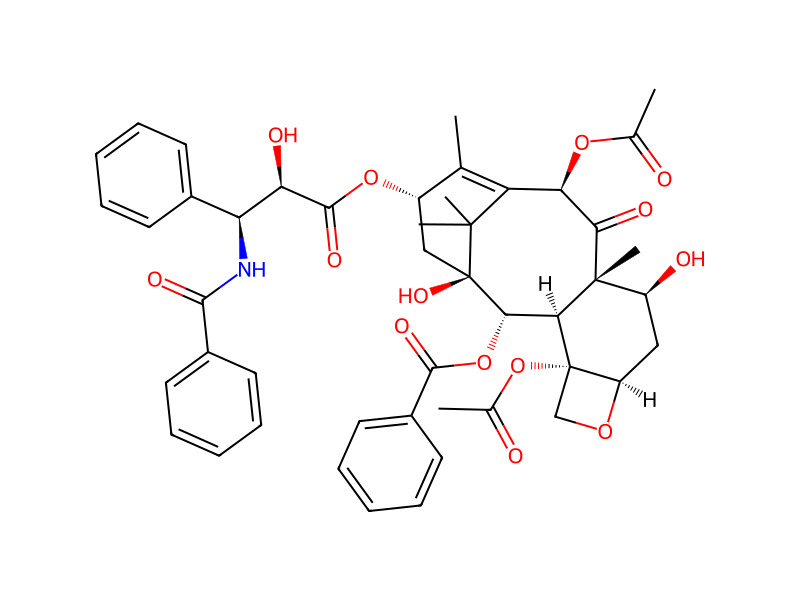
Product 1

Reagents, catalysts & solvents 1

Procedure
Before the C-4 sidechain can be added to the C-7 Cbz protected paclitaxel analog (9), the analog (9) must undergo protection of the 2-OH. The protection step is carried out by treating the reaction mixture containing analog (9) with an acid, preferably acetic acid to neutralize the reaction mixture. The dichloromethane in the neutralized reaction mixture is exchanged for ethyl acetate or other ester or amide organic solvent, and the resulting solution of 9 is treated with a strong base, preferably Li t-butoxide, and a benzoyl protecting agent, preferably benzoyl chloride, to form the 2-benzoyl (Bz) 7-hydroxy protected paclitaxel (10).
Workup
- additionby treating the reaction mixture
Sources & evidence
- ORD record
- ord-aa1ceb42baa74aaaafbfc89701da2053
- Source dataset
- uspto-grants-2006_04
- Patent number
- US07030253B2
Reaction notes
Loading…