Hydrochloric Acid → HCID 50923244, compound
Reaction equation

C([O:3][C:4](=[O:25])[CH2:5][CH:6]1[O:10][B:9]([OH:11])[C:8]2[CH:12]=[C:13]([O:17][C:18]3[N:19]=[N:20][C:21]([Cl:24])=[CH:22][CH:23]=3)[CH:14]=[C:15]([CH3:16])[C:7]1=2)C.[Li+].[OH-].Cl>C1COCC1.O.O>[Cl:24][C:21]1[N:20]=[N:19][C:18]([O:17][C:13]2[CH:14]=[C:15]([CH3:16])[C:7]3[CH:6]([CH2:5][C:4]([OH:25])=[O:3])[O:10][B:9]([OH:11])[C:8]=3[CH:12]=2)=[CH:23][CH:22]=1Participants
Reactant 3



Product 1

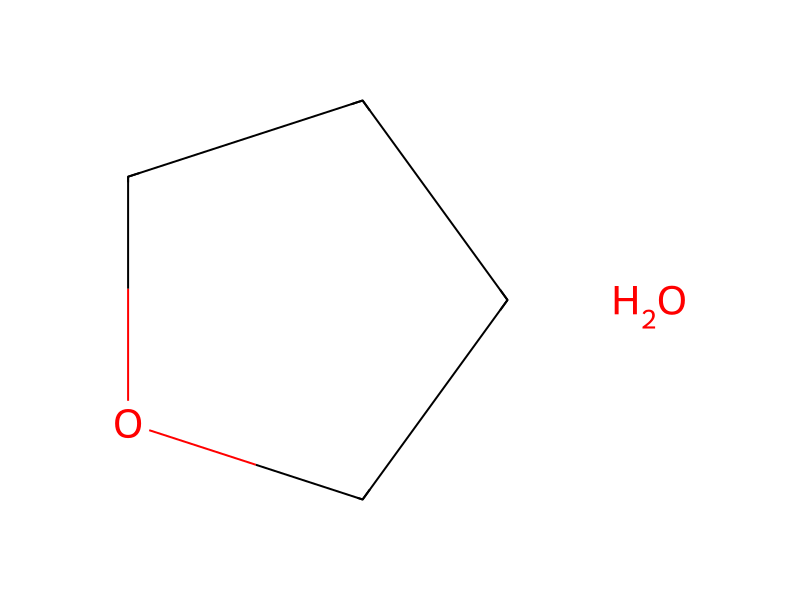
Reagents, catalysts & solvents 2

Procedure
To a solution of [6-(6-chloro-pyridazin-3-yloxy)-1-hydroxy-4-methyl-1,3-dihydro-benzo[c][1,2]oxaborol-3-yl]-acetic acid ethyl ester (0.2 g, 0.55 mmol) in THF:H2O (1:1, 10 mL) at 0° C. was added a solution of LiOH (0.026 g, 1.10 mmol) in water (1 mL). The solution was allowed to warm to room temperature over 3 hours then acidified to pH 2 with 1N HCl (1 mL) at 0° C. and concentrated in vacuo. The residue was purified by preparative HPLC to give [6-(6-chloro-pyridazin-3-yloxy)-1-hydroxy-4-methyl-1,3-dihydro-benzo[c][1,2]oxaborol-3-yl]-acetic acid (0.1 g, 54%). 1H NMR (400 MHz, DMSO): δ 9.21 (s, 1H), 7.96 (d, J=9.2 Hz, 1H), 7.60 (d, J=9.2 Hz, 1H), 7.30 (d, J=2.0 Hz, 1H), 7.15 (d, J=1.6 Hz, 1H), 5.52 (dd, J=2.4, 9.2 Hz, 1H), 3.10 (dd, J=2.0, 15.6 Hz, 1H), 2.31 (s, 3H), 2.18-2.12 (m, 1H). MS (ESI) m/z=333 [M−H]−.
Workup
- concentrationconcentrated in vacuo
- customThe residue was purified by preparative HPLC
Sources & evidence
- ORD record
- ord-98f281709de346adb1217daa372bf958
- Source dataset
- uspto-grants-2013_01
- Patent number
- US08343944B2
Reaction notes
Loading…