3,4-dihydro-2H-pyran → 9-Tetrahydropyranyloxy-1-bromononane
Reaction equation

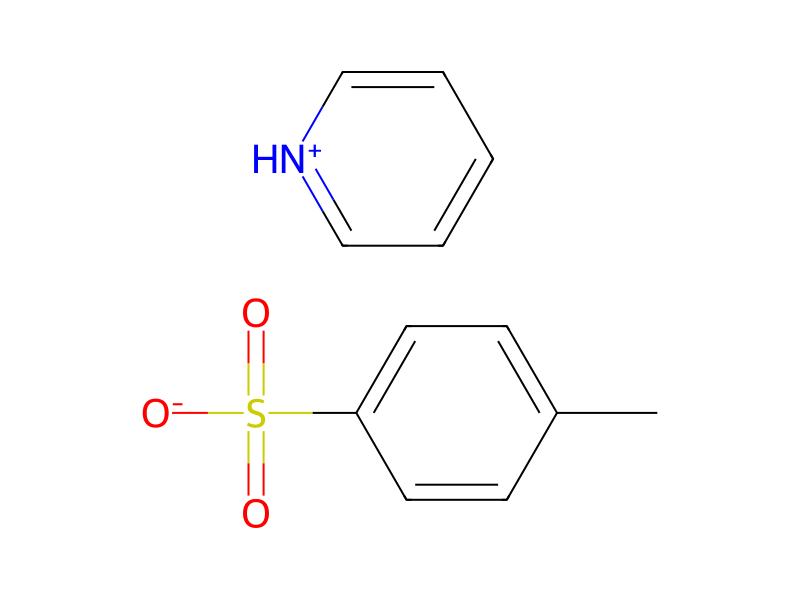
[Br:1][CH2:2][CH2:3][CH2:4][CH2:5][CH2:6][CH2:7][CH2:8][CH2:9][CH2:10][OH:11].[O:12]1[CH:17]=[CH:16][CH2:15][CH2:14][CH2:13]1.C1(C)C=CC(S([O-])(=O)=O)=CC=1.[NH+]1C=CC=CC=1>ClCCl>[Br:1][CH2:2][CH2:3][CH2:4][CH2:5][CH2:6][CH2:7][CH2:8][CH2:9][CH2:10][O:11][CH:13]1[CH2:14][CH2:15][CH2:16][CH2:17][O:12]1Participants
5




Procedure
A solution of 9-bromo-1-nonanol (2.00 g, 8.96 mmol), 3,4-dihydro-2H-pyran (792 mg, 9.41 mmol), and pyridinium toluene-4-sulfonate (1.08 g, 4.30 mmol) in dichloromethane (34 mL) was stirred at room temperature for 16 h, then washed with 2 M aq. sodium carbonate solution and brine, dried over sodium sulfate, filtered, and evaporated. Chromatography (SiO2; heptane-ethyl acetate gradient) produced 2-(9-bromo-nonyloxy)-tetrahydro-pyran (2.45 g, 89%). Colorless oil, m/e=324.1 ([M+NH4]).
Workup
- washwashed with 2 M aq. sodium carbonate solution and brine
- dry with materialdried over sodium sulfate
- filtrationfiltered
- customevaporated
Sources & evidence
- ORD record
- ord-a5f071b285554283a3f763467afaf991
- Source dataset
- uspto-grants-2013_01
- Patent number
- US08344027B2
Reaction notes
Loading…