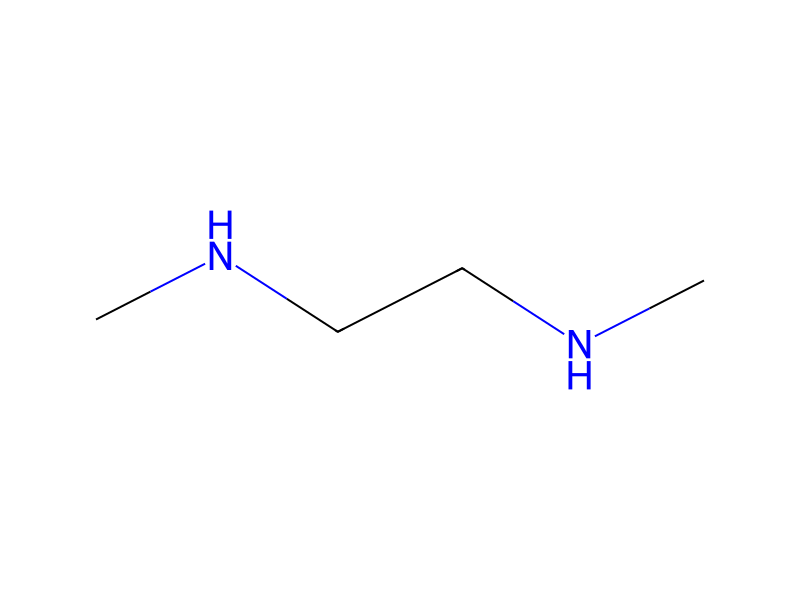
N,N'-Dimethylethylenediamine → 4-(cyclopropylsulfonyl)-1H-pyrazolo[3,4-b]pyridine
Reaction equation

I[C:2]1[CH:7]=[CH:6][N:5]=[C:4]2[NH:8][N:9]=[CH:10][C:3]=12.CNCCNC.[CH:17]1([S:20]([O-:22])=[O:21])[CH2:19][CH2:18]1.[Na+].C(=O)([O-])[O-].[K+].[K+]>CS(C)=O.[Cu]I>[CH:17]1([S:20]([C:2]2[CH:7]=[CH:6][N:5]=[C:4]3[NH:8][N:9]=[CH:10][C:3]=23)(=[O:22])=[O:21])[CH2:19][CH2:18]1Participants
Reactant 4



Product 1

Reagents, catalysts & solvents 2


Conditions
- Temperature
- 100 °C
Procedure
To a solution of 4-iodo-1H-pyrazolo[3,4-b]pyridine (5.2 g) in dimethyl sulfoxide (70 mL) were added N,N′-dimethylethylenediamine (114 μL), copper (I) iodide (202 mg), sodium cyclopropanesulfinate (8.16 g) and potassium carbonate (5.06 g) at room temperature under argon atmosphere, and the mixture was stirred at 100° C. for 16 hr. The reaction mixture was filtered, water was added to the filtrate, and the mixture was extracted with ethyl acetate. The ethyl acetate layer was washed with saturated brine, dried (MgSO4), and concentrated. The obtained residue was subjected to silica gel column chromatography to give the title compound (0.42 g, yield 9%) as yellow crystals from the fraction eluted with ethyl acetate-hexane (1:1, volume ratio). MS: 224 (MH+).
Workup
- filtrationThe reaction mixture was filtered
- additionwater was added to the filtrate
- extractionthe mixture was extracted with ethyl acetate
- washThe ethyl acetate layer was washed with saturated brine
- dry with materialdried (MgSO4)
- concentrationconcentrated
Sources & evidence
- ORD record
- ord-0a58d9542a994a4c8bc0e0482c449355
- Source dataset
- uspto-grants-2013_01
- Patent number
- US08349886B2
Reaction notes
Loading…