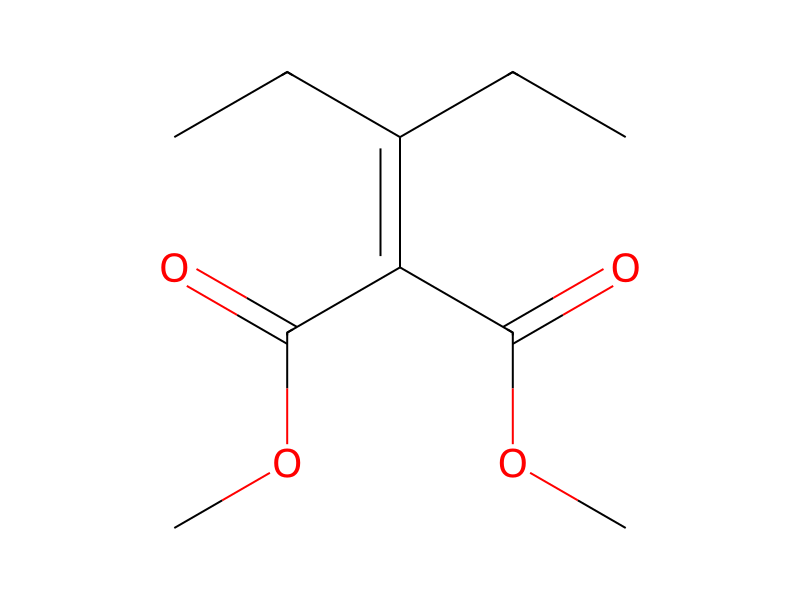
Pyridine → 2-(1-Ethyl-propylidene)-malonic acid dimethyl ester
Reaction equation

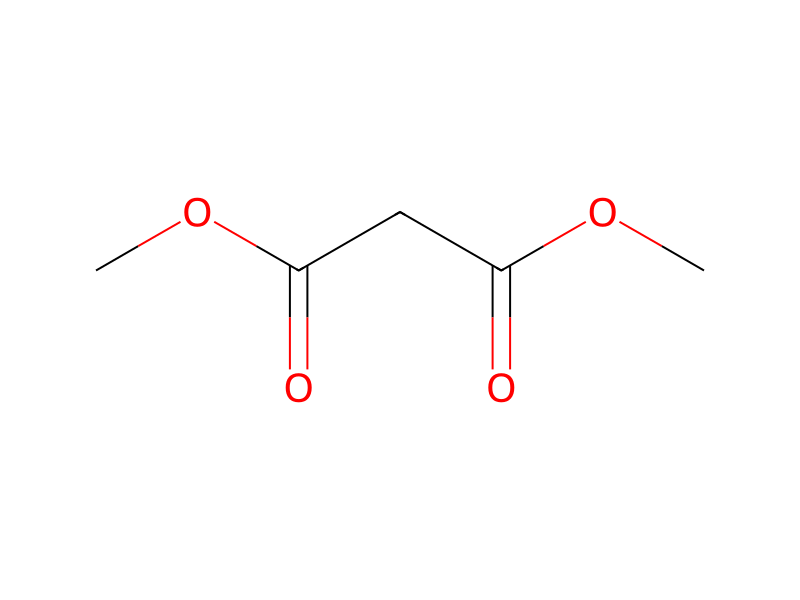
[C:1]([O:8][CH3:9])(=[O:7])[CH2:2][C:3]([O:5][CH3:6])=[O:4].[CH3:10][CH2:11][C:12](=O)[CH2:13][CH3:14].N1C=CC=CC=1.ClCCl>O1CCCC1.Cl[Ti](Cl)(Cl)Cl.O>[CH3:6][O:5][C:3](=[O:4])[C:2](=[C:12]([CH2:13][CH3:14])[CH2:11][CH3:10])[C:1]([O:8][CH3:9])=[O:7]Participants
Reactant 4



Product 1
Reagents, catalysts & solvents 3



Procedure
Step A To a solution of dimethyl malonate (10 g, 75 mmol), 3-pentanone (6.5 g, 75 mmol) and pyridine (7.9 g, 100 mmol) in anhydrous tetrahydrofuran (300 mL) at 0° C. was added a dichloromethane solution (1 M) of TiCl4 (100 mL, 100 mmol) during a period of 1 h. After the addition was finished, the reaction mixture was gradually warmed room temperature and stirred for 18 h. Water was added to quench the reaction. The mixture was extracted with ethyl ether. The organic layer was separated, and the aqueous layer was extracted with ethyl acetate. The organic layers were combined, concentrated. The residue was purified by chromatography (EtOAc:hexanes=1:20) to give 2-(1-ethyl-propylidene)-malonic acid dimethyl ester as a light yellow oil (7 g, 46%).
Workup
- additionAfter the addition
- customwas gradually warmed room temperature
- customto quench
- customthe reaction
- extractionThe mixture was extracted with ethyl ether
- customThe organic layer was separated
- extractionthe aqueous layer was extracted with ethyl acetate
- concentrationconcentrated
- customThe residue was purified by chromatography (EtOAc:hexanes=1:20)
Sources & evidence
- ORD record
- ord-b3bda9c158c3401ab88cb01c0c8f55b5
- Source dataset
- uspto-grants-2013_01
- Patent number
- US08354444B2
Reaction notes
Loading…