3-Hydroxybenzaldehyde → 3-Hydroxybenzyl alcohol
Reaction equation

[BH4-].[Na+].[OH:3][C:4]1[CH:5]=[C:6]([CH:9]=[CH:10][CH:11]=1)[CH:7]=[O:8].O.Cl>CCO.ClCCl>[OH:3][C:4]1[CH:5]=[C:6]([CH:9]=[CH:10][CH:11]=1)[CH2:7][OH:8]Participants
7
Reactant 4
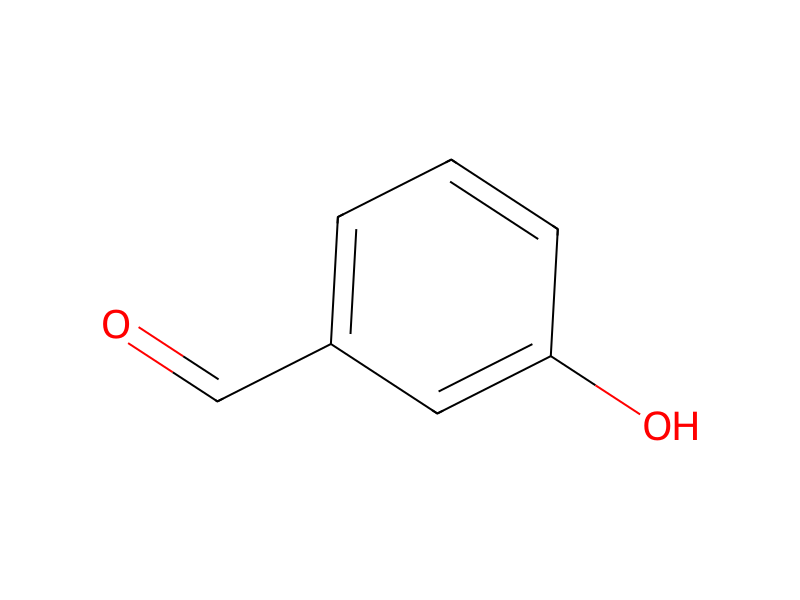



Product 1
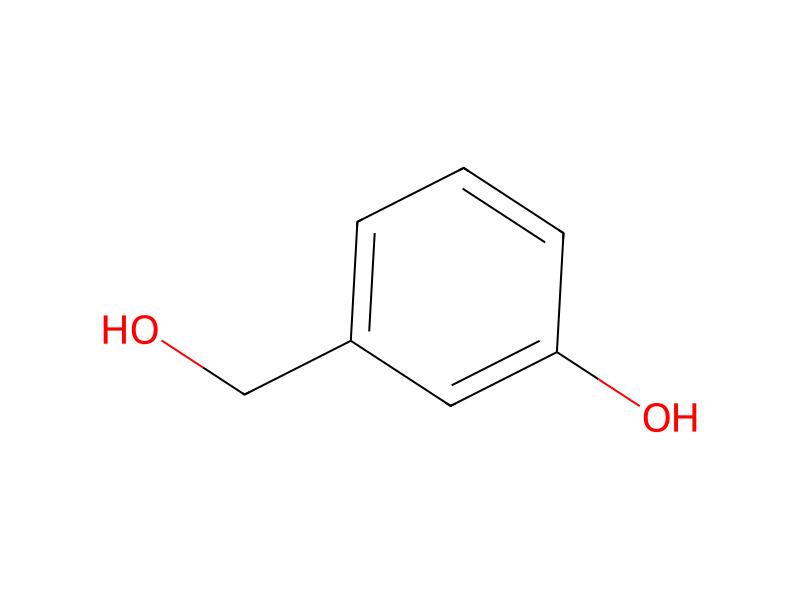
Reagents, catalysts & solvents 2


Procedure
NaBH4 (775 mg, 20.5 mmol) is gradually added to a solution of 3-hydroxybenzaldehyde (5 g, 40.9 mmol) in EtOH (25 mL) while cooling the reaction mixture with cold water. This mixture is stirred for 5-10 min at the same temperature. And then dichloromethane (DCM) (100 mL) is added followed by a 2M HCl aqueous solution (until pH ˜3). The organic phase is separated and the final product is extracted 4 times from the aqueous phase with a EtOH/DCM mixture in the proportion of 1:3. The collected organic phases are dried on Na2SO4. After evaporation of the solvents under reduced pressure, a viscous colorless oil is obtained (4.9 g, 97%), which gradually crystallizes.
Workup
- customThe organic phase is separated
- extractionthe final product is extracted 4 times from the aqueous phase with a EtOH/DCM mixture in the proportion of 1:3
- customThe collected organic phases are dried on Na2SO4
- customAfter evaporation of the solvents under reduced pressure
- customa viscous colorless oil is obtained (4.9 g, 97%), which
- customgradually crystallizes
Sources & evidence
- ORD record
- ord-040cf873c16a4e548bb16d90d3ef58c4
- Source dataset
- uspto-grants-2013_01
- Patent number
- US08361993B2
Reaction notes
Loading…