2,6-Lutidine → HCID 178444630, compound
Reaction equation

C#CCCCCC=O.FC(F)(F)c1ccc(C(=O)CBr)cc1>C[C@@H]1[NH2+][C@@H](C(C)(C)C)N(C)C1=O.[O-]S(=O)(=O)C(F)(F)F.Cc1cc(C)c(-c2c3ccccc3[n+](C)c3ccccc23)c(C)c1.[O-]Cl(=O)(=O)=O.CN(C)C=O.Cc1cccc(C)n1>C#CCCC[C@@H](C=O)CC(=O)c1ccc(C(F)(F)F)cc1.C#CCCC[C@H](C=O)CC(=O)c1ccc(C(F)(F)F)cc1Participants
8
Reactant 3

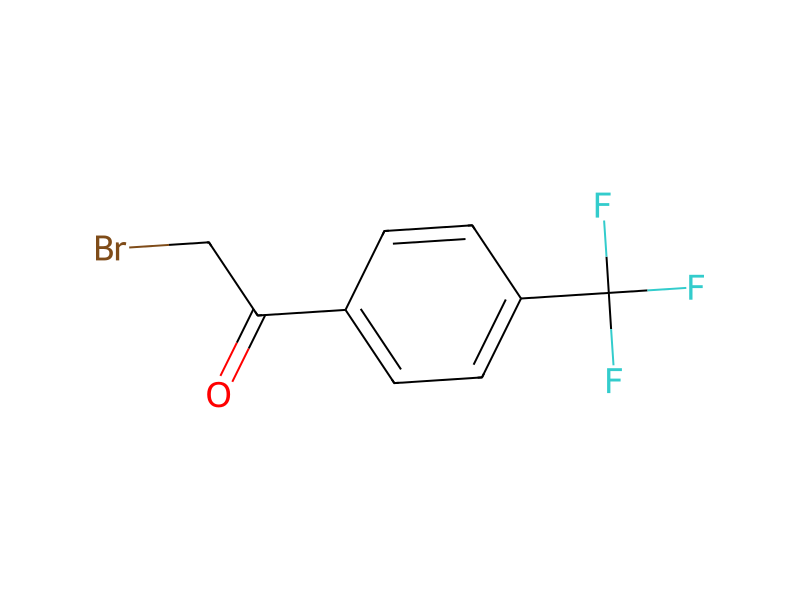

Product 2


Reagents, catalysts & solvents 3



Conditions
- Temperature
- 22 °C
Workup
- aliquot4 uL mixture of each reacted solution was collected and diluted with 36 uL ACN
- addition4 uL mixture of each reacted solution was collected and diluted with 36 uL ACN
- additionchiral resolving regent (150 mM in DCM, 40 uL)
- additionCuI with DIPEA (400 mM in ACN) 40 uL
- additioninternal standard 1-phenylprop-2-yn-1-ol (4) (25 mM in ACN) 40 uL
- stirringNo procedure recorded
- aliquotAfter the reaction, 10 uL of supernatant for each reaction was transferred to another 96-well plate
- additionAfter the reaction, 10 uL of supernatant for each reaction was transferred to another 96-well plate and diluted with 190 uL ACN before the IM-MS analysis
Sources & evidence
- ORD record
- ord-c6fd86e1c8344cf3b325daf4e08e6b6f
- Source dataset
- Dataset from `Ultra-high-throughput mapping of the chemical space of asymmetric catalysis enables accelerated reaction discovery`
Reaction notes
Loading…